With the warm summer months now upon us it is time for everyone to head outside and hit the trail, go camping, climbing, cycling, or take part in whatever your favorite outdoor activity might happen to be. Of course, it is also a good time to inspect our gear and check for new options that can help us to be more comfortable and efficient during our adventurous pursuits. To help us navigate through the sometimes overwhelming and confusing gear options, Outside magazine has posted their selection of the very best gear for summer 2016.
Amongst the items that earn a spot on Outside's list are the new Kelty TN2 tent, which is lauded for its no-nonsense design and ease of use, and The North Face Fovero 70 backpack, which was a favorite with editors thanks to its comfort and ability to carry heavy loads with ease. Klymit's KSB 20 Down sleeping bag gets the nod as the best sleeping bag on the market currently, while Under Armour's unusual Verge Mid GTX shoes take home the honors of top hiking shoe.
Other items on the list include Outside's picks for the best road and mountain bikes, as well as the editors choice for favorite jacket, trail running shoes, fitness tracker, kayak, and much more. In short, it is a list of the very best equipment available today for just about any type of outdoor activity. Whether you like to hike, camp, paddle, cycle, run, or combination of all of the above, you'll find some great gear to help you through the summer on this list.
To get full geared up, and see what other items make the list, check out the full Gear of the Year article here.
Monday, June 13, 2016
Karakoram 2016: First Casualty of the Season, Unprecedented Numbers on K2
The 2016 climbing season in Pakistan is about to officially get underway, as teams of climbers will soon be arriving on the big peaks located there, including Nanga Parbat, Broad Peak, the Gasherbrums, and of course K2. Most of the climbers will begin to arrive in country this week, where they'll put the finishing touches on their preparation before starting the long journey to Base Camp at long last. It now appears that it will be a very busy season in the region, with plenty of expeditions to follow in the days ahead.
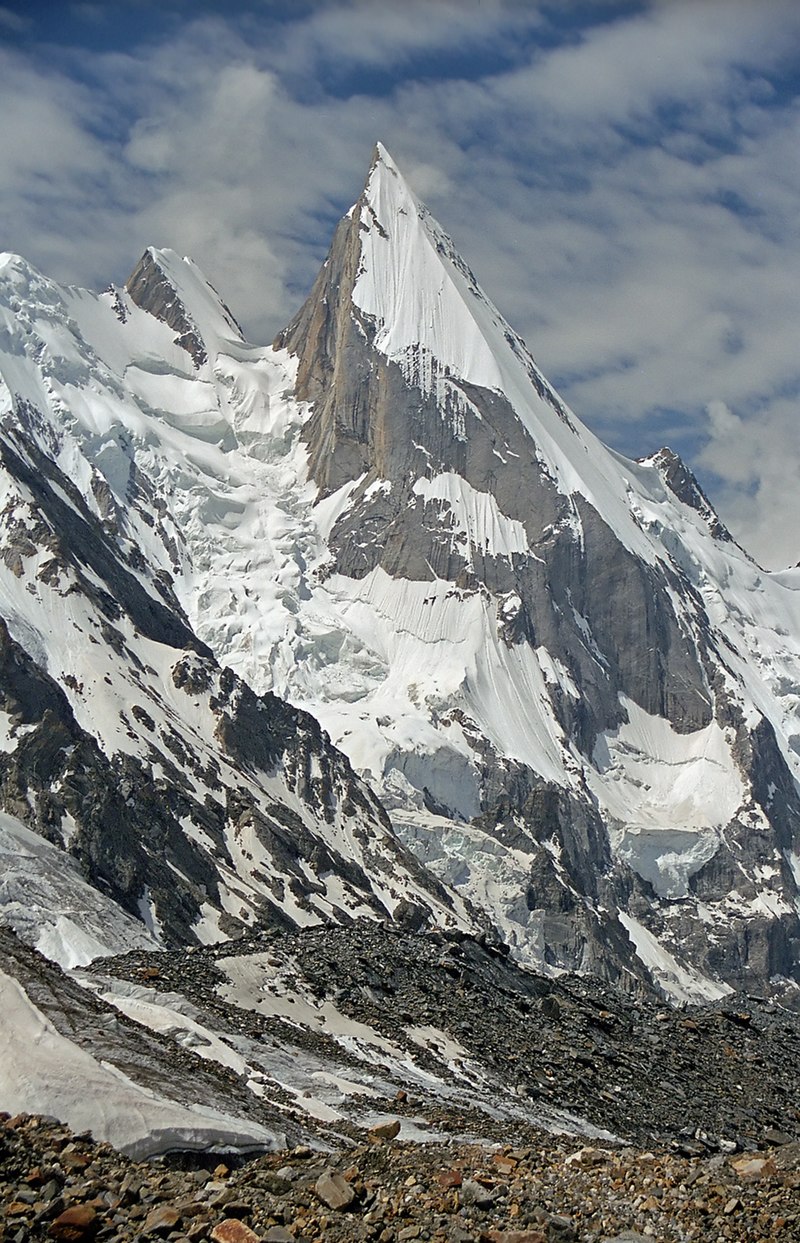
While most of the teams are just now starting to gather, and ramp up their operations, we already have sad news from Pakistan. Over the weekend it was revealed last week it was revealed that Italian ski-mountaineer Leonardo Comelli has fallen to his death on Laila Peak, a 6096 meter (20,000 ft) mountain located in the Hushe Valley region. He was there – along with three friends – to climb the Northwest Face of the mountain, and then attempt a ski descent. He apparently fell 400 meters (1312 feet) after losing his balance.
Even though this accident took place several days ago now, I still wish to express my sorrow and condolences for Leonardo's family. Let's hope this isn't a sign of things to come in the summer climbing season ahead.
In other news, it appears that K2 is will see an unprecedented number of climbers this season. As commercial teams continue to see ways to monetize the mountain, more and more climbers are showing up on its slopes. According to Alan Arnette, more than 112 permits have been issued for the second highest peak in the world this season. That's a dramatic ramp up for a mountain that is many times more difficult than Everest to climb. A mountain that is far more dangerous and deadly as well.
In the same post that reveals the large number of climbers that are headed to the mountain this year, Alan also shares his thoughts on why he believes K2 will never become Everest in terms of large number of mountaineers and hundreds of summits. Because it is such a technical peak, it will remain out of reach for most people. It is simply in a class all its own in terms of difficulty, and the infrastructure and support system in Pakistan is leagues behind that found in Nepal. Alan goes on to say that the weather is worse – and more unpredictable – than Everest, and its remote location makes rescue operations difficult at best.
Could these challenges be overcome in the future? Sure, if there is enough money to be made, infrastructure can be built and rescue operations can be improved. But the mountain will always be incredibly difficult to climb, and there are no truly good ways to overcome that.
As the season progresses, it will be interesting to see what the success rate on K2 will be. In the past, there have been seasons where there have been no summits at all. Sometimes the mountain goes several years without seeing anyone reach the top. Will that change with commercial teams on its slopes? Only time will tell. But it will be fascinating to watch the events unfold, particularly this year when the number of climbers has gone up noticeably.
Stay tuned.
While most of the teams are just now starting to gather, and ramp up their operations, we already have sad news from Pakistan. Over the weekend it was revealed last week it was revealed that Italian ski-mountaineer Leonardo Comelli has fallen to his death on Laila Peak, a 6096 meter (20,000 ft) mountain located in the Hushe Valley region. He was there – along with three friends – to climb the Northwest Face of the mountain, and then attempt a ski descent. He apparently fell 400 meters (1312 feet) after losing his balance.
Even though this accident took place several days ago now, I still wish to express my sorrow and condolences for Leonardo's family. Let's hope this isn't a sign of things to come in the summer climbing season ahead.
In other news, it appears that K2 is will see an unprecedented number of climbers this season. As commercial teams continue to see ways to monetize the mountain, more and more climbers are showing up on its slopes. According to Alan Arnette, more than 112 permits have been issued for the second highest peak in the world this season. That's a dramatic ramp up for a mountain that is many times more difficult than Everest to climb. A mountain that is far more dangerous and deadly as well.
In the same post that reveals the large number of climbers that are headed to the mountain this year, Alan also shares his thoughts on why he believes K2 will never become Everest in terms of large number of mountaineers and hundreds of summits. Because it is such a technical peak, it will remain out of reach for most people. It is simply in a class all its own in terms of difficulty, and the infrastructure and support system in Pakistan is leagues behind that found in Nepal. Alan goes on to say that the weather is worse – and more unpredictable – than Everest, and its remote location makes rescue operations difficult at best.
Could these challenges be overcome in the future? Sure, if there is enough money to be made, infrastructure can be built and rescue operations can be improved. But the mountain will always be incredibly difficult to climb, and there are no truly good ways to overcome that.
As the season progresses, it will be interesting to see what the success rate on K2 will be. In the past, there have been seasons where there have been no summits at all. Sometimes the mountain goes several years without seeing anyone reach the top. Will that change with commercial teams on its slopes? Only time will tell. But it will be fascinating to watch the events unfold, particularly this year when the number of climbers has gone up noticeably.
Stay tuned.
Tuesday, June 7, 2016
Off to the Adirondacks!
I can't say a lot about what I'm doing over the next couple of days, other than that I'm working on a new project with the folks from PrimaLoft. If all goes well, I'll be able to share the results of this project down the line, but for now I have to keep it under my hat. Stay tuned though, as I'll share more when I can.
Next week, The Adventure Blog returns to a normal schedule, at least for a little while. I should have five full days of updates, news, and videos to share before heading to Utah the week of June 20. Thanks for your patience and for reading. I hope to have some good stories to share again soon.
Video: Nat Geo Takes Us to Ireland's Wild Western Coast
Ireland's Wild Atlantic Way is amongst that country's most remote and beautiful places. This video takes us to that rugged coastline where the views are spectacular and the opportunities for adventure are boundless. If you've never been to this place, after watching this you'll definitely want to go soon. Time to update that bucket list.
Video:Further - Running the Length of Haiti
Last year, long distance runner Tassy Fils-Aime set off to run 240 miles (386 km) across the length of Haiti, something that had never been done before. Along the way, he faced numerous challenges of course, not the least of which was the daily distances he had to put in just to complete the run in a reasonably quick time. Fast forward to 2016, and Tassy and his team have now opened up the running challenge to the general public too. This video takes us along on that grueling event, and gives us a chance to see what it is like to travel across the Caribbean country on foot, interacting with the landscapes and locals along the way.
Hillary Clinton Wants to Expand Outdoor Opportunities with "American Parks Trust Fund"
I don't wade into the world of politics all that often, but on occasion there are some stories that are likely to be of interest to outdoor enthusiasts and travelers that are worth sharing. For instance, recently Hillary Clinton – who is running for president in the U.S. – announced her plan for the environment, which includes provisions for encouraging more people to get outside and enjoy the world around us.
At the heart of Clinton's plan is the formation of an "American Parks Trust Fund," which is designed to help expand the outdoor economy while also revitalizing local, state, and national parks across the U.S. The plan would also involve expanding the possibilities for Americans to get outdoors, with new trails initiatives, expanded park systems, and other options for creating outdoor spaces for everyone to take advantage of.
In the six-point plan that was released last week it is explained that the U.S. National Park System has a $11.5 billion backlog of work that needs to be done, including updating infrastructure, modernizing facilities, and repairing worn out equipment. Clinton's plan would address that shortfall, while also doubling the Land and Water Conservation Fund allocations to expand outdoors opportunities and to support the National Parks.
Additionally, the Clinton plan would add new units to the parky system as well, expanding the monuments and protected areas that fall under the Park Service's purview. While no specific sites are named in the brief, the new sites are expected to help celebrate under-represented cultures and people, with historically and culturally significant places beings pulled into the system.
Voting for someone on a single platform isn't really a great idea, but this plan is certainly an interesting one. It now looks like Clinton will be running against Donald Trump this fall, and it will be interesting to see if he has any plans that are similar. It'll also be interesting to see how either one of them plans to pay for these initiatives as well. Erasing the $11+ billion Park Service shortfall will be a challenge in and of itself, but doubling the money for the cause will be a significant hurdle to say the least. Of course, we're in the phase where candidates promise the moon and figure out how to pay for them later. Still, it is great to see that outdoor issues are being addressed ahead of the November elections.
At the heart of Clinton's plan is the formation of an "American Parks Trust Fund," which is designed to help expand the outdoor economy while also revitalizing local, state, and national parks across the U.S. The plan would also involve expanding the possibilities for Americans to get outdoors, with new trails initiatives, expanded park systems, and other options for creating outdoor spaces for everyone to take advantage of.
In the six-point plan that was released last week it is explained that the U.S. National Park System has a $11.5 billion backlog of work that needs to be done, including updating infrastructure, modernizing facilities, and repairing worn out equipment. Clinton's plan would address that shortfall, while also doubling the Land and Water Conservation Fund allocations to expand outdoors opportunities and to support the National Parks.
Additionally, the Clinton plan would add new units to the parky system as well, expanding the monuments and protected areas that fall under the Park Service's purview. While no specific sites are named in the brief, the new sites are expected to help celebrate under-represented cultures and people, with historically and culturally significant places beings pulled into the system.
Voting for someone on a single platform isn't really a great idea, but this plan is certainly an interesting one. It now looks like Clinton will be running against Donald Trump this fall, and it will be interesting to see if he has any plans that are similar. It'll also be interesting to see how either one of them plans to pay for these initiatives as well. Erasing the $11+ billion Park Service shortfall will be a challenge in and of itself, but doubling the money for the cause will be a significant hurdle to say the least. Of course, we're in the phase where candidates promise the moon and figure out how to pay for them later. Still, it is great to see that outdoor issues are being addressed ahead of the November elections.
Summer Travel: Outside Takes Us Beyond the National Parks
Everyone knows that America's National Parks are amazing destinations, but those 59 places aren't the only great places to visit inside the U.S. national park system. In fact, there are 351 other "units" that fall under the care of the National Park Service, and Outside magazine shares their favorites in a new article entailed 351 Amazing Places that Aren't National Parks.
The article looks at some of the best national monuments – such at Mt. Rushmore and George Washington's birthplace – as well as other destinations that include national coastlines, historic battlefields, and numerous other places that are part of NPS but haven't been given the title of "national park."
Outside even has some suggestions on places to go if you want to avoid the crowds. For example, rather than visit the wildly popular Grand Canyon, the magazine's editors suggest going to Canyon De Chelly National Monument instead. Want to examine impressive fossils? Skip Petrified Forest National Park and go to Dinosaur National Monument in Colorado and Utah to get your fix. The point is, there are some good alternatives to the more crowded parks that offer similar experiences without having to battle lots of other visitors, which can make the experience a much better one.
Check out the entire list of Outside's suggestions here. Then, start making your summer travel plans.
The article looks at some of the best national monuments – such at Mt. Rushmore and George Washington's birthplace – as well as other destinations that include national coastlines, historic battlefields, and numerous other places that are part of NPS but haven't been given the title of "national park."
Outside even has some suggestions on places to go if you want to avoid the crowds. For example, rather than visit the wildly popular Grand Canyon, the magazine's editors suggest going to Canyon De Chelly National Monument instead. Want to examine impressive fossils? Skip Petrified Forest National Park and go to Dinosaur National Monument in Colorado and Utah to get your fix. The point is, there are some good alternatives to the more crowded parks that offer similar experiences without having to battle lots of other visitors, which can make the experience a much better one.
Check out the entire list of Outside's suggestions here. Then, start making your summer travel plans.
Subscribe to:
Posts (Atom)