Showing posts with label Adventure Travel. Show all posts

Friday, August 26, 2016

Gear Closet: Victorinox Traveller Lite Swiss Army Knife

In terms of outdoor gear, there are few pieces of equipment that come close to being quite so iconic as the famed Swiss Army Knife. This handy tool can trace its roots all the way back to 1891, which is when the company that would eventually go on to be known as Victorinox would begin producing their first knives. Since then, those products have continued to evolve and are now shipped all of the world, with just about every outdoor enthusiast owning on at some point in their lives.

Recently, I carried the Victorinox Traveller Lite with me on my trip through Mongolia, and as usual, it proved itself to be a handy companion. The knife comes equipped with everything you need, and a few things you didn't even know you wanted, making it a useful item to have in your pack or pocket at just about any time.

Sorting through the incredibly long catalog of knives on the Victorinox website will probably leave your head spinning. There are so many choices to examine that it can be difficult to find the one that best suits your exact needs. But, the Traveller Lite was certainly a good choice for me, as it features just about every tool imaginable, including both large and small knife blades, a can opener, screw driver, a bottle opener, a corkscrew, scissors, and more. In short, it has about every tool you wold expect from a Swiss Army Knife, and they are all squeezed into a small enough space that it can easily be slipped into your pocket.


One thing that does set this knife apart from the scores of others that Victorinox makes is a small LCD screen that can be found on its translucent case. That screen displays the time, temperature, altitude and barometric pressure, all of which are handy features to have in the backcountry. The tiny screen is powered by a small watch battery that slides into a specially designated slot. That slot was kind of challenging to gain access to at first, but thankfully you shouldn't have to change the battery too often.

In terms of build quality, the Traveller doesn't disappoint. It feels solid in your hands, and as with most other Swiss Army Knives it has been designed to survive in demanding environments. Using the various tools doesn't give you the sense that anything is about to break, nor does it seem like any corners were cut in designing and assembling this product. I can't always say the same about similar knives I've used in the past, some of which have failed me at the most inopportune times. As with all knives from Victorinox, this one comes with a lifetime warranty as well, which means if something should break, you'll get it replaced for free.

I carried this knife with me everyday while in Mongolia, and even I was surprised at the number of times I pulled it out to use one of the various tools. The knife blades were probably the ones I needed most often in that setting, but others such as the integrated tweezers and toothpick came in handy from time to time too. At times, it felt like I was carrying a full tool box in compact form right in my pocket.

The Traveller Lite is one of the more expensive knives in the Swiss Army collection. At $111 it is probably a bit pricey for most outdoor enthusiasts who don't need all of its features. For those folks, I'd recommend something like the Huntsmen, which has many of the same tools – minus the electronic gadgetry – and sells for just $40. But, if you're someone who ventures into the backcountry often, or does a lot of mountaineering, the Traveller Lite is a good option. It's LCD screen displays some important information, and it provides plenty of good tools to see you through some demanding trips. For those folks, the $100+ price tag is worth the investment, and you'll likely have a tool that will accompany you on my future adventures.

Check out the entire line of Victorinox knives and other products at Victorinox.com.

Adventure Travel Briefs: A Cruise Ship in the Northwest Passage and Is Adventure Travel Endangered?

There have been a number of interesting stories to come out of the adventure travel industry lately, not all of which are worth their own post, but together they make an interesting story to share with readers. For those of you out there who enjoy pursing some adventures of their own, here are a couple of things to have on your radar.

Luxury Cruise Ship Sails the Northwest Passage
In recent years, climate change has allowed the famed Northwest Passage – an area of open sea in the Arctic Ocean above Canada – to become far less treacherous and more navigable by boat. In the past, the ice would either stay locked in place even during the summer months, or the route would remain dangerous due to large ice bergs choking the path. That isn't the case any longer, and for several months each year it is possible to sail from the Atlantic to the Pacific via the Arctic.

Now, a luxury cruise ship by the name of Serenity has embarked on a 32-day journey across the entire passage. The ship set sail from Seward, Alaska last week, and is now making its way towards New York City. While small ships have made their way along the legendary route in recent years, this is the first time a large ship has done so. The Serenity can carry more than 1700 people.

Hopefully the cruise goes off without any major issues. The Canadian Coast Guard estimates its response time to an emergency at 11 hours. That's a long time should anything go wrong. Fingers crossed this doesn't become a major trend either, as the Arctic Ocean is still a very fragile ecosystem.


Richard Bangs Takes Us to Madagascar
Mysterious and enchanting, Madagascar is high on my places to visit that I haven't been lucky enough to get to just yet. I'm even more intrigued after reading Richard Bangs' recent article for The Huffington Post, in which he delves into the history, culture, and people that live on the island country just off the coast of Africa.

In the incredibly well written piece, Bangs paints an impressive picture of the place, which is at a crossroads environmentally, and yet is still a fascinating ecological preserve filled with creatures that aren't found anywhere else on Earth. Amongst those creatures are Madagascar's famous lemurs, which are held in high regard by the locals and it is strictly forbidden to kill. But in his travel through the land, Richard goes in search of a rumored restaurant that allegedly serves lemur on the menu. Does he find it? And what other wonders does he discover there? Read on to find out.

Is Adventure Travel an Endangered Species?
Our final adventure travel story come from the blog at Tusker Trail. The article was written awhile back, but still asks an intriguing question – Is adventure travel an endangered species? In the article, the author indicates that fear and a desire for safety and security are causing many travelers to abandon their hopes of living an adventurous life, with many now playing it safe and sticking close to home.

With terrorist attacks taking place all over Europe, strange diseases like Ebola and Zika, striking Africa and South America, and other potential threats making headlines, it is easy to get caught up in the belief that danger is lurking around every corner when you start to wander too far from home. But, in reality, we all know that isn't the case, and that these are mostly isolated incidences that are far from the norm.

Yes, travelers do accept that there is always the potential for danger when setting out on an adventurous excursion. But, isn't that a part of adventure travel? As the Tusker article says, adventure travel may be compromised, but it is far from dead. There are still plenty of amazing places to go, things to do, and sites to see. As the author says, study your destination thoroughly, do your homework ahead of time, and know what you're getting yourself into. Chances are, you'll be better prepared to deal with situations as they arise, and probably avoid danger altogether. At the very lest, don't let fear keep you from traveling the world and seeking out adventure.

Something I agree with wholeheartedly.

Thursday, August 25, 2016

Gear Closet: Catalyst Apple Watch Waterproof Case

I have a confession to make. I absolutely love my Apple Watch. In fact, I pretty much wear it every day. It isn't just a watch for me, but also a fitness tracker, communications device, and a way to keep tabs of my calendar. It also holds my boarding passes when going through the airport, discreetly displays text and alert messages, and controls my music and podcasts when I'm out on a run. In short, it has become an important part of my daily life. 

All of that said, there are times when I wish the Apple Watch were a bit more rugged. Sometimes I'll wear it on my outdoor adventures, and it seems a bit fragile for use in the backcountry. Especially if I'm doing anything that involves being out on the water. Don't get me wrong, the Watch can survive a dunking, but Apple falls short of actually declaring it water proof, and you're on your own if you go swimming with it. Which is why I was eager to try out the Apple Watch Case from Catalyst, a product that promises to add rugged protection to the smartwatch and even protect it from water.

The Apple Watch Case is certified to the IP68 standard, which means it will keep your watch waterproof down to 50 meters (165 ft). It has also been built to the MIL-SPEC 810G standard for protection against drops as well, giving your Apple Watch a suit of armor that protects it from the elements. Those two factors alone make it a worthwhile product for anyone who like to wear their smartwatch in the outdoors, as you'll definitely feel more confident when it is wrapped up in this protective shell. 

Installing the Apple Watch Case is surprisingly easy. There is one tiny screw to remove (Catalyst includes a proper screw driver in the packaging) to gain access to the interior of the case. Before doing so, you simply remove the current watch band that you have on the Apple Watch – a process that takes seconds – and then place the watch housing itself inside a thin rapper seal that provides an extra level of protection from moisture. Then, you place it into the case and reseal it using the same screw and screw driver. 

When it clicks into place, the housing is completely sealed tight, yet you lose no functionality. The watch face remains just as responsive to your touch as it was before and the device can continue to monitor your heart rate, provide haptic feedback, use the speaker and mic, and connect to its magnetic charger. Catalyst has even cleverly designed buttons and a digital crown to fit over the existing versions on the Watch itself, allowing full interaction with all its features. In fact, after installing the case on my Watch I almost forgot that I had made the change, as it felt just as natural interacting with it as before, and the case felt incredibly comfortable on my wrist at all time. 

Last week, while traveling in Quebec, I had the opportunity to truly put the Apple Watch Case to the test. Many of the activities took place on the water, so I spent my days stand-up paddleboarding, kayaking, canoeing, and even whitewater rafting. Throughout all of those activities the case performed exactly as advertised, keeping my precious Apple Watch fully protected. I even jumped out of the raft and body surfed some rapids on my own, and my device came out completely unscathed. It was an impressive display to say the least, and it convinced me that the case would keep my watch fully protected just about anywhere. 

As mentioned, the case is quite comfortable to wear, and doesn't add a lot of bulk to Apple's sleek smartwatch. In fact, after my trip was over I debated as whether or not I should just leave it on permanently. In the end, I did remove it (also a simple affair) in part because I enjoy the versatility of being able to change up the look of the Apple Watch on a moment's notice. But, knowing that I have Catalyst's case at my disposal for future adventures makes me very happy.

The Catalyst Apple Watch case is available for the 42mm version only and costs $59.99. To me, it is a worth investment if you like to use your Apple Watch while traveling or exploring the outdoors. It definitely adds a great level of protection that isn't there out of the box, and will allow it to survive being immersed in water without any fears. 

Find out more at CatalystCase.com

Wednesday, August 24, 2016

Gear Closet: Dog & Bone Locksmart Mini Bluetooth Smart Padlock

Keeping your possessions safe and secure while traveling can be a real challenge in this day and age. It seems no matter where you go, someone is looking to steal your stuff. That's why it is a good idea to carry a padlock with you when you hit the road, as it gives you the ability to secure your bags when they aren't in sight. But if you're like me, remember a combination to such a lock can sometimes be difficult, particularly if you don't use it often. And sure, you could always use a lock that requires a key instead. But, in the age of constantly evolving technology and increasingly smarter devices, there seems like there should be something better. Allow me to introduce you to the Locksmart Mini from Dog & Bone.

At first glance, the Locksmart Mini looks like most other padlocks you might come across. It has a thick, durable hardened steel shackle that connects to whatever it is you want to lock up, and its body feels durable and tough in your hand. The exterior is coated in a protective covering that also give is a unique, colorful look too. But upon further inspection, you'll start to notice a few things that separate this lock from others. For example, there is an LED light on the front, and no key hole whatsoever.

Yep, you read that right, this is a lock without a key or combination of any kind. Instead, the Locksmart connects to your smartphone via Bluetooth and is controlled by an app (available for iOS and Android). That app allows you to unlock the device when you need access to your belongings, but also gives you the ability to control multiple locks or even share access with someone else from anywhere in the world. That means that even though you're away on a trip, you can still allow someone back home to unlock the Locksmart should the need arise.

Paring the lock with your smartphone takes just a few seconds, and couldn't be easier. The real power lies within the app that you must download and install on your mobile device. It is from there that you can name your locks and turn off and on certain features. The app also allows you to add other users, giving them full or temporary access to your Locksmart.


The device comes with a built-in, rechargeable battery that Dog & Bone claims is good for 3000 uses before needing a recharge. In my testing, I haven't come anywhere close to that number, but can tell you that device still registers as having 100% battery even after unlocking it dozens of times. That bodes well for its long term use, but before you set off on a trip somewhere, you may want to check to be sure the lock has plenty of juice in its battery.

To unlock the Locksmart you simply tap a button on the bottom of the lock that wakes it from sleep mode. The LED on the front will turn on and change to a green color. Next, you launch the app and select the proper lock for your list. Once the smartphone and lock have connected (which takes a few seconds), you simply tap the Unlock icon on the screen and the padlock opens. It really is as simple as that.

Dog & Bone does give you a "Location Mode" option which allows the Locksmart and your phone to connect to one another automatically when they are within range of one another, allowing you to bypass the step of actually pushing the button on the lock, but that comes at the expense of battery life. In order to achieve the feature, the lock wakes itself up from sleep mode every 30 seconds, which means you'll have to monitor its battery a lot closer. The convenience of this mode is nice though, as you can open the Locksmart from across the room at just about any time.

The Locksmart has a couple of other nice features that come in handy as well. For instance, you can track its location at any time, with its current spot highlighted on a map. That makes it easy to find should your bag get stolen. There is also a Tracking Mode that will give you an alert on your smartphone every time the lock passes out of range. This comes in handy in case someone picks up your locked luggage and attempts to make off with it, although it also comes at the expense of decreased battery life.

For me personally, the Locksmart is a great option when traveling. I love that it is very durable and secure, and yet doesn't require me to remember a combination or carry an extra key. It is important to remember that this lock is not TSA approved however, which means you can't use it on luggage that you are checking at the airport, and you might have to remove it while passing through a security checkpoint. But other than that, it is a great option for travelers who are looking to keep their gear more secure, but want the convenience that comes along with using a smart lock instead.

The Locksmart does cost a bit more than most padlocks. It carries a price tag of $69, which is a far cry from other travel locks that can be had for under $20. But, I will say that this lock is more durable than most other travel locks I've tried, and the added conveniences it brings makes it worthwhile to me.

Find out more at Dog & Bone's website.

Gear Junkie Gives Us 10 Gear Trends to Watch for in 2017

It's hard to believe but 2016 is already starting to wind down. Sure, we're still in the midst of the dog days of summer here in the Northern Hemisphere, but the final days of August is in sight, and we're only a few short months from the end of the year. With that in mind, our friends over at Gear Junkie have peered into their crystal ball and looked into the future, giving us 10 gear trends to watch out for in 2017.

For anyone who attended the Summer Outdoor Retailer convention a few weeks back, most of these trends won't come as much of a surprise. Walking the halls of the Salt Palace in Salt Lake City, Utah, it was clear where the industry is headed. But, those same trends aren't quite as clear to the outside observer who wasn't lucky enough to see all of the major outdoor brands collected under one roof.

So what can we expect from our gear in 2017? I won't spoil the entire list, but there are certainly a few items that are worth mentioning. For instance, there is definitely a concerted effort in the outdoor industry to make our gear more "green." Companies are searching for ways to use recycled materials for instance, and they are changing the way they manufacture their products so that they use less water and have a decreased impact on the environment. We've seen a few efforts in this direction in the past, but it is really picking up steam now. Over the next few years, those efforts will not only increase dramatically, they'll also become much more common place.

Other trends that Gear Junkie says we should watch for include more sophisticated drones, boots that grip ice better, and performance apparel that will help keep us cooler. The other items on the list are equally intriguing, and definitely reflect the same things I saw at OR.

If you're a gear nerd like me, you'll probably find GJ's list very interesting. The industry is definitely moving forward with some new initiatives and we'll all get the opportunity to benefit from it.

Monday, August 22, 2016

Video: Remote Iceland as Seen by a Drone

Take a drone's eye view of remote Iceland in this video, which gives us stunning views of the landscapes that are found there. You'll catch a glimpse of everything from rugged coastlines, snowcapped peaks, and lush forests, with just about everything in between. You'll discover a place that is epic in scale and is calling out to be explored. After watching the 2+ minute clip you'll begin to understand why Iceland holds such an allure with travelers.

Gear Closet: The Zus Ruggedized Charging Cable is a Fantastic Travel Accessory

These days when we travel we always carry a host of gadgets with us. In fact, depending on the trip I'm taking, I often have a wide variety of devices that I need to keep charged while on the go. Those include a smartphone, tablet, and at various times a rechargeable headlamp, smartwatch, water purifier, headphones, and more. In order to keep all of those items from becoming nothing more than dead weight, you'll also need to carry charging cables, most of which are not designed for use in the back country or withstand the rigors that are often placed on them when traveling. But fortunately, there are some options on the market that are built to survive, even in remote environments, making the ruggedized charging cable a must have for outdoor adventurers.

One such cable is the ZUS from Nonda. Encased in an outer shell of tough nylon braiding over a thin PVC tube, and made up of protected aramid fibers, this cable was built from the ground up to survive darn near anything. In fact, the ZUS was tested in the lab and survived being bent more than 15,000 times without suffering damage. But if that wasn't enough to convince you, it is also backed by a lifetime guarantee.

Available in standard micro-USB, USB-C, and Apple Lightning versions, the ZUS cable definitely feels more substantial in your hands than most other charging cables I've used, especially those that come directly from a device manufacturer. There is a clearly defined resistance in the cable that you can feel as you use it that simply provides a sense that even though you're twisting it about, it isn't doing any kind of damage to the cable itself.

Speaking of twisting it about, the ZUS has also been built to be tangle free, which is something I appreciate when traveling. The materials used to create this cable also prevent it from wrapping up around itself, which means you can pull it out of your pack and plug it into your device and charging solution within a matter of seconds. If you're carrying multiple cables with you, this feature is even more handy, and the ZUS doesn't end up wrapping itself around them. And since it comes with its own built-in Velcro tie, it is extremely easy to keep it organized too.


I've been using the ZUS on a number of my summer trips ranging from up-state New York to the wilds of Mongolia to the craziness that is Outdoor Retailer, and beyond. I have found that it has now become my go-to cable whenever I need to charge something. Partly because it is easy to pull it out and plug it in, but mostly because I know it will survive whatever I throw at it. Moving forward, it is likely that I'll replace all of my cables with the ZUS as it just happens to be a great choice for the adventure traveler.

If I had one complaint about the design of this cable it would be that the USB plug is turned at a 90º angle over what you are most likely accustomed to. Nonda says that this is to improve its compatibility with the ZUS car charger (which I reviewed here!), but I found it to be not as handy when plugging it into other charging units, including the battery packs that I carry with me when I hit the road. A most standard approach to the plug layout would have been more useful for me in general, and I suspect others might find similar challenges from time to time.

That said, this is an extremely well built cable that travelers will appreciate immensely. And at just $19.95, it isn't priced all that much more than most other cables on the market, while being less expensive than other ruggedized cables that I've come across.

A review of charging cables certainly isn't as sexy as the latest boots, sleeping bags, and jackets from our favorite outdoor companies, but it is still a product that most of us use on a daily basis. In this case, we're getting a cable that is built specifically for road warriors and outdoor adventurers, something that can't be said about most. If you happen to find yourself breaking or fraying your charging cables while out in the field, give the ZUS a look. I think you'll be happy with the the $20 investment, which will survive just about anywhere that you take it.

Friday, August 12, 2016

On the Road Again: Heading Back to Quebec!

Just another quick note to let regular readers know that there will once again be no updates next week. My time back home was brief, and now I'm headed back to Quebec, Canada for another adventure. Some of you may recall that I was in Quebec this past winter where I had the opportunity to do some snowshoeing and dogsledding in some of the most beautiful (and cold!) conditions ever. Now, I'll return once again to the Saguenay-Lac-Saint-Jean region where I'll be whitewater rafting, stand-up paddleboarding, sea kayaking and hiking. It should be a wonderful time and a nice way to contrast the region between the two seasons.

While I'm away, the Karakoram climbing season should finally come to an end, and I'm sure there will be other interesting adventure news taking place. I'll try to post updates upon my return of anything important that may have taken place. Regular updates will resume on August 22, at which time I'll actually be home for several weeks in a row. That will be the first time that that has happened in several months.

Until then, enjoy the last few weeks of summer, get outside and have some adventures of your own, and explore this great big planet of ours. I'll be back before you know it!

Video: In the Land of the Midnight Sun - A Visit to Norway

Need a bit of an escape as we head into the weekend? You'll find it in this five minute video that takes us into the Nordland region of Norway where we discover epic landscapes, breathtaking vistas, and a place where the sun never sets – at least at this time of the year. It is an incredibly beautiful clip with some amazing views that will leave you desperate to get outside and pursue an adventure of your own. We all might not be able to get to a place that looks like this in the next few days, but I'm sure we can still find an outside setting that can captivate us none the less. Don't miss this video. It is well worth your time.

An Aerial Perspective of Nordland from Michael Fletcher on Vimeo.

Thursday, August 11, 2016

Video: Tusker Trail's Mongolia Trek - Episode 3

Today we have Tusker Trail's third and final video of their Mongolia Trek, bringing a close to the journey. This video is a strong visual companion to the articles I have written recently about my own experiences on this amazing trip, and watching the three videos over the past few days has brought back some fantastic memories of our ride through the Altai Mountains. If you've read those stories and wanted to see what this part of Mongolia looks like for yourself, you can watch these videos to get a sense of the place. Better yet, you can sign up and go yourself. Check out the final clip yourself, and start planning your own Mongolia adventure.

Gear Closet: Solartab Portable Solar Charger

Now days it is not uncommon to travel into the backcountry with an array of electronic devices. Most of us will take a smartphone and sometimes even a tablet. We carry rechargeable headlamps, GoPro cameras, GPS devices, and a variety of other gear. The problem is, it isn't always easy to keep the batteries in all of those gadgets charged up, and without power they mostly become dead weight. But, thankfully there are some handy methods to carry extra power with us wherever we go, and improvements in the efficiency of solar panels has made them a viable option too. Which is why the Solartab portable charger was so intriguing to me as an option for backcountry power. Recently, I had the chance to put the device to the test, and came away fairly impressed.

At its core, the Solartab is a 5.5 watt solar panel that covers the front of the device. That panel is paired with a 13,000 mAh batter that can store the power collected from the sun for future use. That's a sizable battery in its own right, and enough to recharge an iPhone six times over, with power to spare, or fully recharge an iPad with enough juice for a smartphone too. When you pair that with the built-in solar panel, you have a  way to keep your gadgets running indefinitely, at least in theory.

The Solartab – which is roughly the size of a standard model iPad – also comes equipped with a custom made case that not only protects the solar panel, but also allows the user to adjust its angle to ensure that it is always drawing the most power possible from the sun. A handy light on the side of the device even tells you when it is actually generating energy, which is automatically stored in the battery pack.

Two 2.1 amp USB ports can then be used to transmit that power to any gadget capable of recharging via USB. That includes just about any small electronic device today, including headlamps, action cameras, GPS devices, UV water purifiers, and so on. A micro-USB port on the Solartab can be used to charge up the internal battery from AC wall outlet before you leave home, ensuring that you always have enough power on the go. Indicator lights on the side of the panel are a handy indicator to let you know just how much juice is in the Solartab at any given time.

The two USB ports are actually quite fast, although when a device is plugged into both ports you'll see a drop in speed. Still, an iPhone 6S can be powered up in about an hour and a half, and my iPad Mini was restored to full strength in under three hours. That's about on par with plugging those devices into the wall.

As with most small solar panels, the Solartab can be a bit of a mixed bag at times. In direct sunlight it can charge fairly quickly, and since you have the ability to turn it to face the sun, and shift the angle to get the most exposure, it works well on clear, sunny days. But, when the clouds come out its ability to draw a charge can be severely hampered. The designers of the device say that under the best of conditions it can take about 12 hours to fully recharge the device's battery, but don't expect those conditions to come around all that often.


Still, I was fairly impressed with how the Solartab performed in reference to similar devices from the competition. The issues with collecting power from the sun aren't an issue that this charger faces on its own, as pretty much every small solar panel that I've tested has performed similarly, with some not even doing as well as the Solartab. In other words, this is about par for the course for this type of solar panel, so set your expectations accordingly.

One area that the Solartab shines is build quality. Taking it out of the package I found myself pleasantly surprised with how well constructed this product is. The device is very durable, and feels substantial in your hand. Even the integrated case has a high quality feel to it, as does all of the included accessories, which range from a USB charging cable and AC adapter, to a soft cloth for keeping the solar panel clean.

All in all, the combination solar panel and battery pack is a nifty design, and comes in handy when traveling. But, the main problem I have with the Solartab is that it is a bit heavy to carry around, especially if you're someone who likes to travel light. The charger will definitely add some bulk to your pack, which makes deciding to take it with you a challenge sometimes. On the one hand, it is a handy product for when you want to stay charged on the road. On the other, it is heavier than I'd like.

Another issue to be aware of with the Solartab is that there is no easy way to affix it to a backpack for charging while you hike. This is somewhat common for a solar panel like the Goal Zero Nomad 7, but due to its size and bulk, it really isn't a possibility here. Instead, it is mean to be set up at your campsite to gather power all day, but if you're moving around a lot that isn't necessarily an option. This won't be a deal breaker for everyone of course, but it is something to be aware of.

When it was first released, the Solartab carried a price tag of $129, which I found pricey but still worth it for the right person. It is currently selling on the Solartab website for just $89, which makes it a lot easier to recommend. I've seen solar panel and large battery packs that cost that much on their own, so getting them integrated into one device is truly a bargain.

If you need portable power to keep your gadgets functioning on the go, the Solartab is a good option. It is sleek, well made, and efficient. Yes, it does add some weight to your pack, but if you can put up with that, you'll literally have a portable power station that you can take with you just about anywhere. That alone makes it a viable solution for those of us who are routinely on the go. I just hope in the next model they can find a way to cut some weight a bit and thin it down some. At that point, this would be a nearly perfect product.


Wednesday, August 10, 2016

Video: Tusker Trail's Mongolia Trek - Episode 2

Today we have our second video from Tusker Trail's amazing Mongolian itinerary, the same one that I've been writing about so extensively recently. This second clip takes us into the heart of the journey, giving you a great look at the Altai Mountains, the route we took, and the people who inhabit this remote part of the country. If you've ever had an interest in visiting Mongolia for yourself, this video will give you an idea of what to expect, and more than likely will only fuel your desires to go yourself. It is a truly magnificent place filled with unique experiences.

Tuesday, August 9, 2016

Video: Into the Ancient Heart of Australia

Australia's Red Center is beautiful, wild, and ancient. This video takes us on a timelapse journey through that part of the world, giving us sweeping shots of the amazing landscapes that are found there, some of which are more than 500 million years old. Throughout the clip you'll witness the changing of the seasons, watch dramatic weather come and go, and see the Milky Way sparkle overhead. This is a truly breathtaking short film that captures the spiritual essence of a place incredibly well. Sit back, enjoy, and take it all in.

Video: Tusker Trail's Mongolia Trek - Episode 1

If you've been reading my stories about my recent trip through remote Mongolia on horseback this video will especially be of interest. But even if you haven't read a single word of that series of posts, you're sure to find something to love here. This is the first of a three part series that Tusker Trail produced to promote their Mongolian adventure. It takes us to the vary places I visited while in that country, and gives a visual context to the various people and places I've been describing in those articles. If reading my words hasn't inspired you to want to make this journey yourself, this series of videos certainly will. Part 1 is posted below and I'll share the other two installments over the next couple of days. After that, you'll more than likely want to see the Altai Mountains for yourself.

Men's Journal and Victorinox Declare October 14 a National Day of Adventure

Mark your calendars. Friday, October 14, 2016 has been declared the first ever National Day of Adventure, and we're all being encouraged to participate.

Last week, Men's Journal and Victorinox Swiss Army – makers of those legendary knives and other outdoor gear – announced that they were creating a new holiday and are challenging us to all head outside to live life more fully and tackle a new challenge. To that end, they have created the "National Day of Adventure" (hashtag #NDOA) to encourage everyone to learn a new skill, try something new, or simply push their own boundaries in some way.

To help get things started, MJ and Victorinox will be hosting events in New York City, New Jersey, Minneapolis, and Seattle, with more locations potentially coming soon. One of those events will be an urban scavenger hunt where participants will go in search of gear, while others could include organized trail runs or rides, races, and so on. More events will be posted soon at MensJournal.com/NDOA.

In September, Men's Journal will publish editorial content in both their print and digital editions of the magazine that will offer suggestions for the best one day adventures in certain locations across the U.S. Additionally, the MJ website will also be updated throughout September and October with more adventure focused content.


Jay Gallagher, the Publisher of Men’s Journal, said “This day is designed to inspire people around the country to achieve greater personal fulfillment and experience life beyond the ordinary.”

Dennis Piretra, Senior Vice President of Marketing at Victorinox Swiss Army, added "We’re excited to integrate 125 years of Swiss Army Knife preparedness into the inaugural National Day of Adventure with Men’s Journal and we look forward to celebrating everyone’s adventures large and small on October 14.”

So there you have it. A day designed specifically for pursuing your adventures. I already know that I'll be in Spain on that particular day, so I'm sure I'll be having an adventure of some kind. But what about you? Will you participate? Is this just a marketing scheme by two big corporations or is it a good thing? Personally, I feel that anything that inspires people to lead a more adventurous life, even if its just for one day, is a good thing. Perhaps this will be the gateway that will allow more people to pursue the adventure they always dreamed of, and if that's he case, I'm all for it. 

I'm sure we'll hear more about this the closer we get to October 14. Until then, start thinking about what you'd like to do with your National Day of Adventure. 

Monday, August 8, 2016

Mongolia by Horseback Part 5: The End of the Trail

This is the fifth – and final – installment of a series of posts I've been writing about my recent travels through Mongolia with my friends from Tusker Trail. If you haven't read the first four parts of the series, I suggest you do so before proceeding onward. They'll help to put the story into context, and give you a better sense of the entire trip. Here are the links to those earlier posts: Part 1Part 2Part 3Part 4. And as always, thanks for reading!

When we last left off on our tale of Mongolian adventures my traveling companions and I had just cleared a high mountain pass on horseback and had descended into a pristine valley populated by the nomadic Tuvan people. As with the other nomads we had seen on our journey, these herders travel across the steppe four times a year, moving their campsite for spring, summer, fall, and winter. With few exceptions, their lives have remained mostly unchanged for centuries, and their white yurts dotted the landscape throughout the remainder of our ride.

After descending from the mountain pass, we spent a soggy night huddled in our tents as the rain fell outside. It made for a good excuse to climb into our sleeping bags and relax after a long day on the trail. The next morning we rose to find the ground saturated, and dark gray clouds hanging overhead, but thankfully no rain coming down. Temperatures had dropped noticeably however, so we all bundled up for our day in the saddle.

Getting our day started quickly, we continued our ride down the valley, stopping to visit one of the local Tuvan families as we went. As usual, they welcomed us into their home with traditional Mongolian hospitality, offering fried breads, milk tea, and various other snacks. Later, they would show us a number of craft goods that were made right there in their own homes, which several members of the group gobbled up quickly for souvenirs to take home to friends and family. The colorful handbags and stuffed camels were particularly popular.

Back in the saddle, we all watched the skies overhead warily. At times it looked like the clouds would part and we'd have another glorious day in the Altai. Minutes later it would appear that rain was imminent. By the time was stopped for lunch we could look back up the valley to where we had camped the night before and see that the rain was falling in bucket loads. Thankfully, we had avoided it so far, but it seemed only a matter of time before our luck ran out.


In the meantime, our lunch spot for the day turned out to be one of the true highlights of entire trip. As we rested atop a small hill, we could spot numerous rock formations dotting the slopes around us. This particular place featured a number of spectacular petroglyphs – ancient carvings of humans and animals – on the rocks, and we all had a great time wandering about finding various displays of this unique artwork. The images includes ibex, goats, sheep, and other creatures, as well as images of early man who lived in this region over the course of thousands of years.

After scrambling through the rocks for a time, we hastily had lunch and got back on our horses. By then, it was clear that rain was imminent, and we wouldn't be able to avoid it for long. Sure enough, within a half hour of leaving the petroglyphs behind it began to pour, and I soon regretted leaving my rain pants in my duffle bag that day. While I had a great shell jacket on to keep my warm and dry, my pants were soon soaked through as the cold rain continued to fall. It made for an uncomfortable ride to say the least, and a learned a valuable lesson about the importance of packing the right gear in my saddlebags before I left camp each morning.

Fortunately the rain didn't last too long, and after clearing a couple of mountain ridges, it was soon behind us. The sun even popped out to warm us up and dry off our clothes and bodies. It was a welcome relief for sure, especially as our afternoon ride wore on. That day we were descending to a campsite in the Tsagaan River valley, which would be our home for two nights. To say that everyone was looking forward to a brief break from moving about every day was an understatement, so we were all eager to get to our next stop.

The trail took us down a couple of steep descents and over some small, but rapidly moving, rivers. But the Tsagaan itself was far too high and dangerous to cross on foot or horseback, so we had to ride an extra mile or two to reach a wooden bridge that would allow us to safely pass. After that, it was a short ride to the campsite, were we all quickly settled in for dinner, great conversation, card games, and a good night's sleep beside the glacially fed waterway.

The next day was listed as a "rest day" on our schedule, but for most of us that just meant that we didn't have to pack up and hit the trail right away. We didn't sit idly in camp however, as after breakfast we took a nice long walk up a nearby trail to reach a beautiful mountain lake. The hike not only gave us a good excuse to stretch our legs, but it allowed us to climb up to an elevation that provided outstanding views of not only where we had been and were currently camping, but where we would be headed the next day as well. In the distance we could see sweeping glaciers coming down from the mountains, creating an enticing preview of things to come.

The morning hike took several hours to complete going round trip, with the group returning to our campsite in time for a late lunch. After that we were expecting a local Naadam Festival to take place, in which the locals would once again put on a display of their riding abilities. We were also hoping to see a demonstration of their wrestling skills as well, which is a popular sport in Mongolia. Unfortunately, the threat of poor weather loomed over the valley throughout most of the afternoon, so the Naadam ended up being cancelled. That led to a leisurely day around camp as we prepared to hit the trail once again the following day.

Back in the saddle on day 12 of our journey we left the river valley behind and began climbing back up into the mountains. The route began easily enough as we passed through mountain meadows on clearly marked trails. The mountains loomed ever closer however, and those sweeping glaciers that we had seen at a distance just the day before, began to grow much closer.

As the day went on, the trail wound its way into an area filled with large rocks and plenty of loose scree, all of which was deposited there over many centuries by the movements of those ice flows. Our mounts carefully made their way through this treacherous section, and I was once again glad that these sure-footed ponies were accustomed to this type of terrain.

After riding about 15 km (9 miles) that day, climbing steadily as we went, the group reached what would ultimately be our final campsite. Perched alongside the glacier at roughly 10,000 feet (3048 meters) we had clear views of Khuiten Peak, the tallest point in the country at 4373 meters (14,350 ft). We could also spot nearby Nairamdal Peak as well, which marks the exact location where China, Russia, and Mongolia come together.

Spirits were high in the group that evening as we all knew we were closing in on the end of the ride. It was a bittersweet feeling however, as the scenery and hospitality that we had been shown was second to none, and all of us travelers had built a bond with one another throughout the journey. While we were all starting to look forward to starting our return trips home, we all knew that it would be difficult to say goodbye too. That is always the toughest part of seeing an adventure come to an end.

In typical Tusker fashion, we celebrated our final night in the Altai Mountains in fine fashion. Prior to the start of dinner, our wonderful guides broke out some unexpected luxuries for us to enjoy. Those included tasty smoked salmon, caviar, and vodka. They even mixed up some fine dirty martinis to enjoy with the spectacular backdrop of glaciers and mountains that surrounded us. It is nice touches like these that helps to set Tusker apart from the crowd, and elevates them above any other adventure travel company I've ever traveled with.

The following morning we were eager to get underway once again, and hit the trail about as early as we had the entire trip. Breaking camp went very quickly, and before we knew it we were already on the road to toward the finish line. We weren't the only ones eager to complete the last stage of the ride, as our horses clearly knew that it was the final day too. Turning down hill at last, they trotted along very quickly, occasionally breaking into a run as we neared the local ranger station that would be our exit point.

The final ride was only about a half-day in length, but it didn't disappoint. Once again, the scenery was spectacular as we rode through valleys with snowcapped peaks towering above us. For the most part, it was a very easy trail to the station, with one significant river crossing and mostly rolling hills. My horse, obviously ready to be rid of me, even broke into a solid gallup from time to time, which left me hanging on for dear life a couple of times. But eventually I learned to let him go, and simply enjoyed the final stages of the trip.

Once we reached the ranger station, we collected our gear, organized our packs, enjoyed a quick lunch, and said goodbye to the talented horsemen that had seen us through the journey. They took their herd of horses and camels and soon departed, beginning their own journey back home. It would take them a couple of days to get back to where we started, and they would arrive there even as the rest of us were leaving Mongolia behind as well.

The adventure wasn't quite over, as we still had a couple of long trips by 4x4 vehicle before we reached the relatively modern comforts of Ulaanbaatar, the capital city where our adventure had begun. That started with a six hour drive across rugged dirt roads just to reach the town of Ulgii where we once again stayed in a ger camp for the night. The following day we had to do a similar trip to another nearby city to catch a flight back to UB. All of the aircraft leaving for the capital from Ulgii were completely sold out, so we were forced to get a little creative along the way.

A short three-hour flight later however, and we arrived in Ulaanbaatar where a hot shower and a comfortable bed were most welcome. While we all enjoyed our travels through the Altai, I think everyone was certainly happy to have a few modern conveniences once again. The following day, we would all slowly, one-by-one, make our way to the airport and the long flights back home, bringing a close to our Mongolian adventure at long last.

To say that this was a thoroughly rewarding travel experience would not do the trip justice. Mongolia is a place that has to be seen to be believed, and its friendly, happy, and outgoing people are a big reason to go there. Yes, the scenery is unbelievable, and the opportunities for adventure are boundless. But it is the people that I met along the way that helped to make the journey such a special one. And if at some point in the future you happen to find yourself there, I think you'll probably agree. Mongol hospitality is second to none.

I'd like to thank Tusker for hosting me on this adventure and reminding me once again what a first class adventure travel company they truly are. Guides Andrew and Mel were exceptional, as were the the entire crew that we traveled with there. It was a true privilege to meet and get to know the entire group, including each of my travel companions too. It was a wonderful experience from start to finish, and one that I'd highly recommend to anyone looking for a truly unique experience in this beautiful country.

The best part is, you can actually do this exact trip yourself. Find out more at Tusker.com and checkout the entire Mongolian itinerary for yourself. And if you have any questions about Tusker in general, or this trip specifically, don't hesitate to ask me. I can be reached at kungfujedi@gmail.com.

Thanks for reading!

The Very Best Gear of 2016 Summer Outdoor Retailer

As you can see, I'm back from Salt Lake City and updating The Adventure Blog once again. While there to attend the Outdoor Retailer gear convention I had the opportunity to see all kinds of interesting, ingenious, and downright crazy new gear that is coming our way in the months ahead. Some of that gear I'll actually get to test myself, and share my thoughts with you readers. But there is simply so much to see there that no one person could ever review it all in a single year.

Thankfully, there are a number of websites that have shared their picks for the best new gear that was on display at the show. For instance, Outside magazine has posted its selection of the 5 best pieces of gear that were unveiled at OR with a new backpack from Arc'teryx and a tent from Cotopaxi each earning a nod.

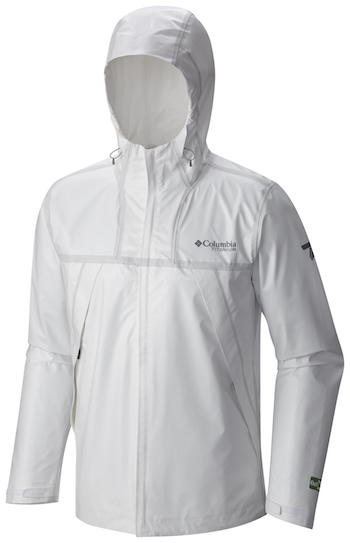
Elsewhere, Popular Mechanics has shared it's picks for best in show as well, with some very interesting products earning a spot on their list. They handed out their "editor's choice" awards to seven new products, including an innovative and eco-friendly jacket from Columbia that was a hit with everyone at the show, and the new BaseLantern camp lighting system from BioLite.

Finally, the Gear Institute – a site that I contribute to and helped picks the award winners for – had posted it's selection of Best New Gear Awards too. We ended up handing out eight awards in total, with winners ranging from an ultra-slim, two fuel stove from Kovea to an innovative new sleeping bag from The North Face.

This is just a small sample of what we can expect in the weeks to come, as the trends that we've expected from the outdoor industry – namely lighter, more efficient, and more versatile gear – continues to be the theme. Your pocket book might not be too happy about all of the great gear that is on the horizon, but as an outdoor lover, chances are you will be very satisfied.

Tuesday, August 2, 2016

Video: A Mountain Biking Expedition to Mongolia

While I was away exploring Mongolia on horseback, this video was released that shares an epic mountain biking trip to the same region that I was visiting. In the short film, three friends travel to the western part of the country to packraft and ride through the spectacular Altai Mountains. It turned out to be quite an adventure, and the footage they captured along the way looks a lot like the region that I recently traveled through as well. If you'd like to know what this place looks like, this will give you a good idea of what to expect if you plan on visiting yourself.

Mongolia on Horseback Part 4: Into the Altai Mountains

This is the fourth installment of a series of posts that I'm writing on my recent travels in remote regions of Mongolia. If you haven't read the first three parts yet, I suggest you do so before reading this one. It'll help to put the entire trip in context and will give you a better understanding of the entire journey. Click on the corresponding post to read more. Part 1 - Part 2 - Part 3.

After spending the first couple of days traveling with Tusker Trail through Altai Tavn Bogd National Park getting acquainted with our horses and settling into a routine of making and breaking camp each day, it was time to truly get our adventure started. During the early days of the trip we had been camping along Khoton Nuur, a beautifully scenic lake overlooked by the numerous gers of the nomadic families that call this region home. But over the course of the next few days we'd leave that section of the ride behind and wander into even more remote areas in the Altai Mountains. In fact, once we changed course we wouldn't see any yurts at all for a few days, and our encounters with other people from outside our group would become next to nothing.

Up until that point, the trail had been mostly flat and the riding very easy. This allowed each of us to get use to long days in the saddle and learn to trust our horses to find a safe and easy route for us to ride. But all of that was about to change as we moved away from the shores of the lake, crossed the Tsagaan Gol River, and moved into the steep gorge of Yak Milk Valley.

The valley marked a definite change in scenery for our team. Prior to entering it the landscapes had been mostly wide open, with plenty of rolling grasslands and gentle hills to ride through. Sure, we were surrounded by high peaks at all times, but those mountains were off in the distance, and didn't seem quite so imposing. But once we rode into the valley that all changed. The walls of those mountains began to close in, the riding became a bit more technical, and the hills that we were forced to climb, both on foot and horseback, grew much steeper.

That said, the scenery remained utterly spectacular. Now we were moving into the heart of the mountains themselves, and Yak Milk Valley – so named for the milk-white water that flowed through the glacially fed river at its bottom – was our gateway to this new landscape.


On our fourth day of riding the morning started like most of the others. We broke camp and hit the trail, which was still mostly flat and easy. But within a couple of hours we crossed a rushing river and entered the valley itself, which was punctuated with rocky ridges, narrow trails, and steep climbs and descents. This was certainly a change of pace from what we had encountered up to that point, keeping both riders and mounts alert at all times.

As usual, the sturdy Mongolian ponies did a great job of finding their way through what could have been a treacherous trail. At times, the best path wasn't always clear, nor was it easy to scamper up and over some of the larger rocks that cluttered the route. But the horses have traveled this way before and they all knew how to proceed, constantly maintaining a steady pace while navigating in and out of trees, around boulders, across rivers and streams, and even through the sometimes-marshy valley floor. And other than an occasional stumble here and there, they did so with remarkable agility and strength, making it easy for even the most inexperienced riders in our group to feel at ease.

After a long day in the saddle, we made camp that night alongside the Tsagaan River in a spot that provided not only spectacular views of where we had come from, but an enticing look at where we were going too. Up the valley we could see taller mountains peeking through the clouds, their snow-topped summits glistening in snow. We all knew the next day in particular would be a challenging one, as we would ascend to one of the highest altitudes of the entire trip while crossing through a mountain pass that has been used by travelers in this region for centuries. It would be a test for both the riders and trekkers, and one that we were all eager to see for ourselves.

That night we all enjoyed another fine Tusker meal, and curled up comfortably in our sleeping bags. It had been the most demanding day yet, but we knew that tomorrow would be even more challenging. It would involve more than 3000 feet (915 meters) of vertical gain, which always makes for a big day in the mountains. But, we also knew that once we cleared the pass, there was a dramatic descent on the other side. One so steep that everyone would have to walk it, not just those who had elected to hike the route. What that might look like remained a mystery, but we were all eager to find out.

The following morning continued our string of great weather, with more sunshine and blue skies overhead. Temperatures had dropped somewhat when we entered Yak Milk Valley as well, which meant it should be a pleasant day to ride and hike in the Altai.

When looking at the itinerary for the trip I had always circled this day as one that I wanted to hike. I thought by now (rightfully so!) that I might want a break from the saddle, and I truly enjoy a good walk in the mountains. There was even a part of me that was looking forward to the challenge of ascending out of the valley, walking across the mountain pass, and descending down the other side. So, on that beautiful morning I joined our intrepid group of trekkers for what promised to be a nice long walk. I was not disappointed.

Not long after we hit the trail we began moving upwards. With so much altitude to gain that was to be expected of course, and it wasn't long before we were huffing and puffing as we dragged ourselves up the flanks of the mountains. Our companions on horseback soon passed us by and were definitely enjoying the views while their mounts did most of the work. In the early stages of the walk I envied them to a degree, as it was much easier to ride than to hike. But eventually we climbed over a ridge and the trail changed from a steep climb to a more even-paced, slow but steady, ascent. And by the time we broke for lunch in the bowl of a mountain vale, our trek had become a very pleasant stroll indeed.

After lunch the walk shifted into an aerobic workout once again however, as we scrambled onto the dusty, rocky trail that would take us the rest of the way up to the pass. That route proved to be a challenge not only for us hikers, but our camel train as well. Loaded down with equipment and supplies, the camels were working hard too. As a result, they slowed greatly as our guides gave them time to catch their breath and crest the hill at their own pace.

My fellow trekkers and I took this as an opportunity to slip past the animals and make our way to the top. Our mounted companions found themselves stuck – and waiting not-so-patiently – behind the camels, so it turned out that we were the first to reach the mountain pass and begin crossing over to the other side. We wouldn't stay out in front for long however, as the camels eventually topped out as well, and the travelers on horseback soon over took us in the wide saddle of the pass that slipped seamlessly between two mountain peaks.

Once we crossed over the pass we learned why even those who had elected to ride would have to walk down the other side. The steep descent featured numerous switchbacks along a dusty trail that featured loose scree that made keeping your footing a completely different kind of challenge. The camels and horses slowly crept down the other side without any problems of course, but doing so with a rider in the saddle seemed like an unnecessary risk.

Descending to the valley below took nearly as much time as climbing up from the other side. The route was slick enough in spots that you had to slowly in order to avoid falling unceremoniously on your backside. I was glad I had elected to bring a set of trekking poles for the hiking portions of the trip, as without them it would have been even more of treacherous descent. But eventually we all made it down, and the riders were allowed to return to their steeds to continue the final portion of the day. I rejoined my fellow trekkers as we hit the trail once again, knowing that our campsite for the night wasn't especially far off at that point.

Despite our optimism, we still had a couple of hours of hiking yet to go, although by this time the route was mostly down hill. We did stop at the top of a steep cliff to marvel at the unbelievable view of the valley below as however, as it was simply too gorgeous for words. At that overlook we could see for miles as a classically U-shaped valley – the tell-tale signs of being carved by a glacier – stretched out before us. It was one of those places where you simply wanted to sit down and take in the view for as long as you possibly could. It was definitely one of the highlights of an already amazing trip, and one of those "Kodak moments" that don't come along very often.

Eventually we did have to continue our descent however, and after walking for another hour or so, we reached our campsite for the evening in the Sheveed Uul Gorge. The area had clearly gotten quite a bit of rain recently as the small river that ran through our camp was rushing at a high speed and the ground was saturated, making it a very wet spot to camp. We made the best of the situation however, and soon got as comfortable as we could.

That particular campsite proved to be a memorable one for a number of reasons. In addition to being a bit like camping in a bog, we also found ourselves just across the river from a ger – the first we had seen in a couple of days. The family that lived there had a rather large herd of goats and sheep that were grazing on the hills above our camp as well, and that evening as we started to get settled into our tents, the entire herd descended upon us. We had a mini-stampede of tiny hooves go running through the camp, and I opened the door to my tent to find it completely surrounded by the animals. It was quite a sight to see indeed, and although they passed through very quickly, the managed to pass with only a bit of minor damage to a couple of the tents.

That evening also marked the end of our string of good weather. Shortly after dinner heavy rains moved in, sending all of us travelers scrambling to our tents for shelter. It was early yet, so we weren't necessarily ready to call it an evening, so my tent-mate and I set up an impromptu home theater system using my iPad as our movie screen and propping our duffle bags behind our sleeping pads to create stadium seating. It ended up being a pleasant way to spend the evening as we whiled away the hours watching a Lord of the Rings film.

At this point we were about halfway through the journey, with plenty of riding and great scenery yet to come. For me, the trip was already everything that I had hoped for, but it wasn't over yet. The was plenty more adventures on the horizon, which I'll share in another installment or two in the days ahead.


Monday, August 1, 2016

Video: Into the Land of the Lost

Galicia is an independent region on the northwest coast of Spain that is known for its dramatic landscapes, sweeping vistas, and breathtaking slopes. Outsiders aren't a common site in this part of the world, but those who do make the trip are treated to some amazing settings, many of which remain mostly untouched by man. In this video, we travel into this land of the lost to witness its beauty for ourselves. I think that you'll agree that the results are nothing short of spectacular.

Galicia, Land of the Lost from Daniel Almeida Visuals on Vimeo.