Showing posts with label Mountaineering. Show all posts

Friday, August 26, 2016

Himalaya Fall 2016: Busy Season Ahead in Nepal

It looks like the fall climbing season in Nepal will be a busy one. After seeing a resurgence of climbers on Everest and other 8000 meter peaks this past spring, it now appears that the trend will continue with a slate of climbs scheduled for the fall as well. And with the official start of the season just a few days away, scores of mountaineers are now arriving in country.

According to this story from The Himalayan Times Manaslu will be the favorite target for the climbing teams this autumn. About 100 foreign climbers have received permits to attempt the 8163 meter (26,781 ft) peak, with the first 40 mountaineers departing from Kathmandu yesterday. They'll spend a few days trekking before reaching Base Camp, but should get there sometime late next week, just as the fall season – which traditionally runs from September to November – starts to get underway.

Other mountains that will be seeing some traffic this fall include Dhaulagiri and Lhotse, as well as non-8000 meter peaks Ama Dablam, Himlung and Putha Hiuchuli. Those mountains won't have nearly as many men and women on their slopes however, as Manaslu remains the big draw.

As has become typical for this time of year, there are no reported attempts on Everest from the South Side at this time. That could change as more climbers apply for their permits, but as of now Spanish ultrarunner Kilian Jornet and Japanese mountaineer Nobukazu Kuriki are the only ones who will challenge the world's highest peak this season. Both will make their ascent from the North Side.

According to the story from the Times, some of these groups will be quite large. For instance, Seven Summits Treks will lead four groups consisting of 60 climbers on Manaslu themselves, which may be as much as half of the number of foreign climbers heading to Nepal this autumn.

Following the tragic earthquake last spring, it was good to see mountaineers returning to Nepal this year. By most accounts, the spring climbing season was a highly successful one, and the fall looks to continue that success. Of course, all of these expeditions employ Sherpa guides and high altitude porters, which brings much needed cash to the economy of Nepal as well. We'll of course be keeping a close eye on the proceedings there, and will report any news moving forward.

Gadd luck to everyone heading into the mountains. Stay safe!


Thursday, August 25, 2016

Use of Helicopters on Everest Rises Dramatically

If you followed the spring climbing season on Everest with any regularity this year, it was evident that the use of helicopters on the mountain had risen dramatically. But a new report gives us an even closer look at the numbers, that now show not just a surprising number of flights to the mountain, but that many of them were unauthorized. 

According to this story from The Himalayan Times, there were more than 150 helicopter flights conducted to Everest Base Camp and higher during the spring 2016 climbing season. Sources at the Tenzing Hillary Airport in Lukla say that six companies operated at least 151 flights above 5000 meters (16,404 ft) in April and May without properly reporting their activities to Nepal's Civil Aviation Authority. Of those, about 30% (roughly 45 flights) were to locations above Base Camp, most notably Camp 1 and Camp 2 on Everest.

Regulations state that helicopter flights are to go no higher than BC unless they are conducting emergency rescue operations. Those types of flights are monitored closely by Aviation officials, but it seems in this case many pilots were indicating that they were flying to Base Camp, only to go higher up the mountain later on. Authorities say that by going to higher altitudes the pilots are risking their own lives and those of their passengers, warning that there could be a fatal accident if such operations continue.

Representatives of the six companies that conduct the flights insist that they only went to the higher camps to rescue climbers who requested assistance and that they weren't doing anything outside of the regulations. The fact that so many of those flights went unreported however would suggest otherwise. If all of the flights were conducted above board, there would be no need to not report them. 

The cost of a flight to Everest is not cheap. Most companies charge $5000 for a trip to Base Camp, $7500 to go up to Camp 1, and as much as $10,000 to reach Camp 2. Some of the costs of those flights are covered by the insurance companies for climbers who do have to be rescued, but one has to wonder just who is paying for the other flights. 

There have been some suggestions of increasing the use of helicopters on Everest to help shuttle gear up from BC to the higher camps. This could potentially reduce the number of trips that climbers – and more importantly Sherpas – would have to make through the dangerous Khumbu Icefall. This is the section of the climb just above Base Camp that is widely considered the most dangerous section of the mountain. In 2014, the collapse of an ice serac on this section of the climb killed 16 porters who were carrying gear to Camp 1. 

By using helicopters to do that work instead, it would help alleviate those dangers, but there has been no official go-ahead to begin doing that on a large scale. It seems that some of these flights were being made to ease the process of moving gear, even if no one is necessarily admitting it. 

Will the trend of using helicopters on Everest continue to rise in the years ahead? Almost certainly. Will it make things safer? Possibly. Only time will tell. All I know is, that is a lot of unregulated flights to dangerous altitudes, which seems like a recipe for disaster in and of itself. 

Wednesday, August 24, 2016

Himalaya Fall 2016: Japanese Climber Nobukazu Kuriki Heading Back to Everest

We're in a bit of a lull in the mountaineering scene right now. Yes, Kilian Jornet is in Tibet and preparing for his speed record attempt on Everest, but for the most part this is the time of year when there is a brief pause between the summer climbing season in Pakistan and the fall climbing season in Nepal and Tibet. Most of the teams that are preparing for a Himalayan summit in the next few months are waiting for the monsoon to subside before heading to the mountains. Once that happens over the next few weeks, we'll begin to see climbers arriving in Kathmandu once again.

In recent years, the fall season in the Himalaya has mostly concentrated on 8000 meter peaks other than Everest. A lot of mountaineers use this time of the year to gain valuable experience ahead of an Everest attempt next spring, so you're more likely to see expeditions to Shishapangma, Cho Oyu, or even Ama Dablam. But, there are still some climbers who will focus on the world's highest peak, most notably Japanese Nobukazu Kuriki.

If that name sounds familiar it is because this fall Kuriki will be making his sixth attempt on Everest, once again looking to summit solo and without oxygen. He has tried this same feat in the past, and it hasn't always gone well for him. Back in 2012, the Japanese mountaineer ended up getting stranded high on the mountain and head to be rescued, but not before he suffered severe frostbite in his hands and feet. He ended up losing parts of nine fingers in the process.

That hasn't deterred him from attempting Everest however. He climbed on the South Side last year and made a valiant effort before ultimately having to call it quits. This year he'll have a go at the summit from the Tibetan side of the mountain, where he hasn't climbed before. It is unclear whey he decided to make the change, but it could have something to do with Nepal's recently discussed new restrictions, which ban solo climbers altogether.

Kuriki, who is a popular figure back home in Japan, has crowdfunded his latest expedition, easily surpassing his goals to get the money he needs for this climb. He'll now prepare to head back to the Himalaya this fall, most likely sometime in September. That's about when Jornet hopes to be wrapping up his speed attempt, so the two might not even be on the mountain at the same time.

As German adventure sports writer Stefan Nestler points out, there hasn't been a successful fall summit of Everest in nearly six years. That's when Eric Larsen topped out along with five Sherpas as part of the Save the Poles project. Lets hope Kilian and Nobu have more luck this year.

Tuesday, August 23, 2016

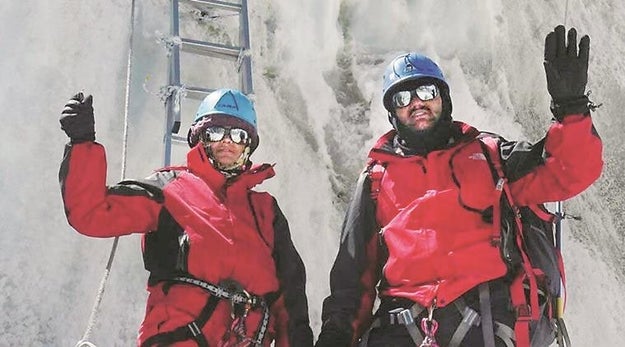
Indian Couple Who Faked Everest Summit Face 10-Year Ban

Remember that Indian couple who were accused of faking their summit of Everest this past spring? It appears that a decision will soon be made on their fate, and it seems they'll not only be stripped of their summit certificates but they're also facing a very long ban from climbing on Everest again.

If you're not familiar with the story, Dinesh and Tarkeshwari Rathod are a husband and wife team who also happen to be police officers back in India. The two claimed to have reach the summit of Everest this past spring, but holes were punched in their story when photos that purported to show them on top of the world's highest peak appeared doctored. It seemed as if they had used photoshop to put themselves on the summit when they hadn't even gotten close to the point. The situation got even murkier when the Nepali guide service that they hired for the expedition certified their summit without any real evidence that they had topped out. Later, when the story received more scrutiny, government ministers in Nepal were forced to retract their summit certificates, and launch an investigation into the proceedings.

Last week, The Himalayan Times reported that a high-level committee looking into the situation has recommended at least a ten-year ban be placed on the couple. That means that for the next decade they would not be able to climb in Nepal at all. The investigation confirmed that the Rathods had made false claims about their expedition and had submitted doctored photos of their climb when applying for the certificates.

Furthermore, the committee also recommended delisting the climbing Sherpas that were with the Indian couple from the climbing record as well. They were working with the company called Makalu Adventure Treks at the time, and are considering action against another member of the team who had backed up the Rathods' claims. It doesn't appear that there will be any actions taken against the government liaison officer who may or may not have been in Base Camp during the time of the expedition either, but it is possible that any member of the expedition could also receive a minimum of a five-year ban.

The couple has stayed mum on all of these proceedings since the news broke, but it seems likely they were hoping to add an Everest summit to their resume to potentially increase their fortunes back in India, a country with a proud climbing tradition. An Everest summit there is seen as quite an accomplishment, which can lead to fame, money, and increased social standing. Now however, they instead face deep shame from their actions.

Monday, August 22, 2016

Himalaya Fall 2016: Kilian Trains in Tibet for Everest

We're back on a regular posting schedule for a few weeks after my recent visit to Quebec, and we have news from the Himalaya about Kilian Jornet's speed attempt on Everest. This expedition will be the last of his "Summits of My Life" project, which has also resulted in new records for the fastest known times on other major peaks, including Kilimanjaro, Aconcagua, and Denali.

If you've been following Kilian's progress at all, you probably know that he left for the Himalaya a few weeks back where he has been organizing gear, continuing his training, and acclimatizing to the altitude. But, we also have a few more specifics about his schedule over the past few days.

Last Tuesday, Kilian flew from Kathmandu to Lhasa in Tibet. He spent a day there before starting the drive to Everest Base Camp, which is accessible by car on the North Side of the mountain. But, it is still a dramatic gain in altitude during that drive, so most people still go slow, and take a few days to reach BC, allowing their bodies to acclimatize a bit along the way. With that in mind, the Spanish ultrarunner has been working out along the way.

Over the weekend, he was in Tingri at 4300 meters (14,107 ft) where Kilian conducted some training runs. That's an altitude he's accustomed to, having spent the last few years making the Alps of Europe his personal playground. He also spent a good deal of time there training before leaving for the Himalaya.

It isn't clear yet just when Kilian and his team will arrive in Base Camp, but I would expect that that will happen this week. From there, the plan is to acclimate to higher altitudes before getting ready to make his historic attempt on the summit of Everest. We're still a few weeks away from that happening, but it certainly should be interesting to follow his preparation for the final push to the top. Especially when you keep in mind that this will be his first foray above 8000 meters.

Kilian's approach to the speed attempt has been a simple one. Get to the mountain while it is still summer, before there is anyone else attempting to climb it in the fall. This will ensure that the route is free from crowds that could potentially low him down. Taking one of the routes on the North Side should help keep the still on-going monsoons at bay to a degree as well, although it still could be dicey up on top. He'll now focus solely on acclimatizing and scouting the route until he is fully ready to go. From there, it will be a simple matter of waiting for the weather to cooperate and then choosing the best time to go.

For now, we all wait for that to happen.

Friday, August 12, 2016

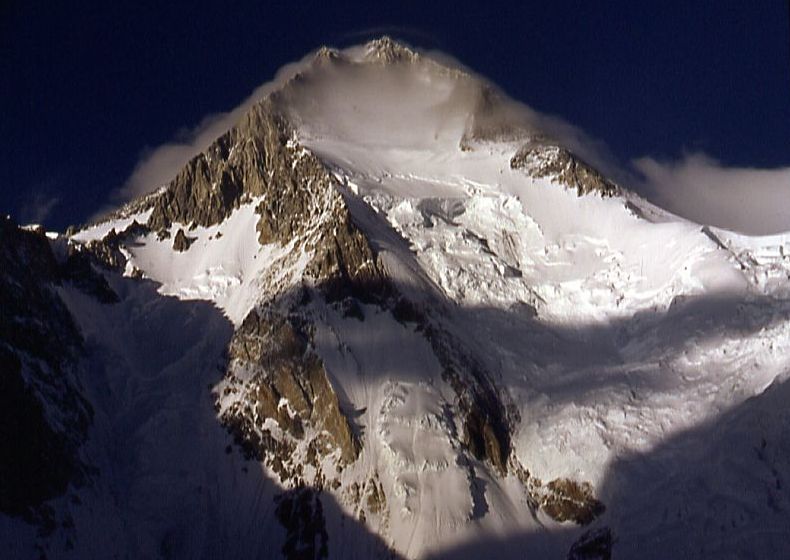
Karakoram 2016: Czech Climbers Launch Summit Bid on Gasherbrum I

Earlier in the week we said that the climbing season in the Karakoram was grinding to halt, with most teams now long gone. But, one team remained in the mountain holding out home that they would still get a chance at the summit on Gasherbrum I, and along a new no less.

Czech climbers Marek Holecek and Ondra Mandula are now in the midst of a summit push along a route that Holecek has already attempted on three previous occasions. According to ExWeb, the duo set out from BC on Tuesday with the hopes of being into position to complete their climb today. Poor weather has momentarily stalled their attempt however, although they are hoping for conditions to improve this weekend so they can finish the ascent.

When the duo launched this summit push they climbed up to 6000 meters (19,685 ft) on Tuesday, setting up their first camp after a long day in mixed weather conditions. On Wednesday of this week the weather had improved and they set out to climb higher, but as they went, conditions once again deteriorated. Snow began to fall on the mountain, and several avalanches occurred, cutting off their ability to safely descend. Instead, they went up and found shelter near a serac, pitching their tent at 6800 meters (22,309 ft). That is where they have stayed for the past two days, waiting for things to improve. The plan is to wait out the weather, then move up to 7400 meters (24,278 ft) for one last campsite before moving on to the summit.

The new route is one that Holecek has scouted in the past, going up Gasherbrum I's southwest face. As mentioned, the Czech climber has failed to complete his ascent along this new path on three separate occasions, but he now believes that his persistence will pay off and he and Mandula can top out. At this point that all depends on the weather, and the amount of supplies that they have left. Summiting this late in the season is a bit uncommon in the Karakoram, but not unheard of. They will need some luck to go their way however.

We'll be keeping an eye on their progress throughout the next few days. Hopefully they'll find success along this new route, but if not it will be more important that they ascend safely. I'll keep you posted!

Wednesday, August 10, 2016

Karakoram 2016: Body Found on K2, Help Required to Identify

Sad news from K2 where a team of researchers have discovered the remains of a fallen climber, but no one has been able to identify him or her just yet. A request for help has been sent out to the mountaineering community in the hopes of determining just who was found on the mountain.

According to this story at Montagna.tv, Michele Cucchi and Paolo Petrignani – working in conjunction with Pakistani guides – were in Base Camp on K2 a couple of weeks back. The team had traveled there to record the current state of the glaciers in that area, and the impact of environmental change on their health. The group climbed up to ABC and could see the damage done by a massive avalanche that hit Camp 3 back in July, sweeping away tents, fixed ropes, and a cache of bottled oxygen. The avalanche effectively brought an end to the K2 climbing season, sending all of the teams there home without a single summit.

Amongst the rubble Cucchi discovered a few oxygen bottles, the remains of several tents, and a human body under a thin layer of ice. The corpse was wearing a Millet boot that was reportedly a size 8 (pictured here). The boot is a recent model, which suggests the accident took place fairly recently as well, but the person who was found remains unidentified at this time. If you can potentially ID this person, you're urged to contact Montagna.tv as soon as possible.

As is tradition on K2, the remains of the climber were taken to the Gilkey Memorial where all of the victims of the "Savage Mountain" are laid to rest. This has been the case sine 1953 and it continues to this day.

Hopefully someone in the mountaineering community will see this story and help identify the unknown climber.

Maddie Miller Sets New Speed Record for U.S. High Points

A couple of weeks back I posted a story about the efforts of mountain guides Melissa Arnot and Maddie Miller, who were attempting to reach the highest point in each of the U.S. states. They had dubbed their expedition the 50 Peaks Challenge and the original plan was to try to get all 50 high points in just 50 days. It turns out that the ladies were a bit faster than that, and in the process Miller actually set a new speed record.

All told, it took the 21-year old climber 41 days, 16 hours, and 10 minutes to climb all 50 of the high points, making that the fastest time ever. Miller also became the first woman to nab all of the summits in under 50 days as well, something that has been accomplished by a handful of male climbers too.

Unfortunately, Arnot can't share in the record because she only reached 49 of the high points. The 50 Peaks Challenge actually began on Denali back in June, but Melissa was unable to climb that mountain. She had suffered an injury on Everest earlier this spring and wasn't ready to make the arduous trip to the top of the toughest mountain in North America. Instead, she had to join Miller after that expedition and accompany her to the top of the other high points. The two ladies wrapped up their efforts by summiting Mauna Kea in Hawaii last week. Arnot has previously summited Denali, giving her all 50 high points as well, just not in record time.

Congratulations to both Melissa and Maddie on this great accomplishment. While many of the high points are easy walk ups or barely a challenge at all, several of them are serious mountaineering challenges. On top of that, to reach all of them in such a short period of time is an impressive feat indeed. That certainly makes for a busy summer and one hell of a road trip.

What did you do with your summer?

Tuesday, August 9, 2016

Karakoram 2016: Season Grinds to a Halt, Summit Video From Nanga Parbat

The climbing season in Pakistan is all but over for another year. For the most part, it was a very tough couple of months in the Karakoram and Himalaya as teams struggled with poor weather and challenging conditions. Summits were few and far between, although there were some successful bids here and there.

Our friend Alan Arnette has put together a wrap-up of the season on his blog with stats and updated summit numbers, the most glaring of which are from K2. As Alan points out there were a record number of permits issued for K2 this season – 112 in total – with a total of zero successful ascents. That gives you an idea of just how tough that climb is, and also how commercial squads are starting to take over the climbing scene there. But unlike Everest, K2 won't surrender its summit easily, and it will be a long time before the conditions are even remotely the same on those two peaks.

Elsewhere, Alan reports that one squad still remains in the region hoping to claim a late summit. A Czech team is still on Gasherbrum I where they are waiting out the weather. It remains to be seen if they'll get another crack at the summit, but the Gasherbrums have seen the most success this summer, so there is a chance we'll see a few more climbers reach the top before we're done.

Finally, we have this video that was shot on Nanga Parbat, where  Spaniard Ferran Latorre, Frenchman Hélias Millerioux and Bulgarian Bojan Petrov summited via the Kinshofer route on the Diamir Face. For Ferran it was his 14th 8000 meter peak, and a significant accomplishment. The video shows their final steps onto the summit.

CAT14x8000 Nanga Parbat 2016: Cim, Cumbre, Summit! from cat14*8000 on Vimeo.

Monday, August 8, 2016

Video: Paragliding Over Broad Peak

A couple of weeks back I posted a story about how extreme paraglider Antoine Girard set a new record by launching from 6500 meters (21,325 ft) in the Karakoram and then caught some thermals that allowed him to soar high enough that he actually climbed up to the summit of Broad Peak. At the time, I mentioned that there was a GoPro video of the flight, but it hadn't been released yet. Now, we have that video, which you'll find below. As you would expect, the short but breathtaking video includes some great shots of the Karakoram as Antoine soars up above those massive mountains. This one was definitely worth the wait.

Monday, August 1, 2016

Karakoram 2016: New Summit Bid Launched on Broad Peak

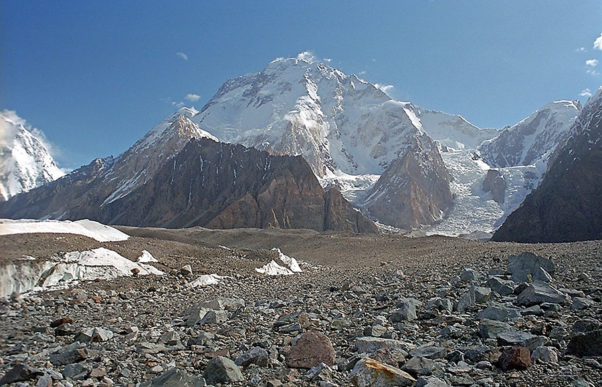
The summer climbing season in Pakistan is quickly coming to an end. After an avalanche wiped out C3 on K2, all of the teams departed that mountain for home, and following a couple of successful summit bids last week on Nanga Parbat, that mountain is all but deserted too. Now, a team of climbers have launched a new attempt on Broad Peak as well, and if all goes as planned they could top out today.

According to Spanish website Desnivel.com, a three-man team consisting of Oscar Cadiach, Manolo Gonzalez, and a local climber named Sahib are in the midst of a final summit push at this very moment. The trio left Base Camp and reached Camp 2 on Saturday, moved up to Camp 3 on Sunday, and are now in position to complete their ascent today.

The weather in the region is reportedly good, and should remain so for another day or two, but as always in the Karakoram, the conditions on the mountain can be fickle and change quickly. Still, the climbers seem poised to complete their expedition, and potential cap what has been a long and difficult season in the mountains.

If Cadiach is able to complete this climb successfully it would be his final 8000-meter peak. Having climbed all of the other 13 mountains of that height, only BP remained on his hit list. Even more impressive, he's managed to climb each of them without the use of bottled oxygen, putting him in very rare company indeed.

We'll keep an eye on the team's progress and report any updates as they come in. Hopefully they'll get up and down the mountain safely, whether they reach the summit or not.

Meanwhile, over on the Gasherbrums there are still a few teams still in place as well. I haven't heard any updates on their progress in recent days, so it is unclear of their current status.

More to come soon.

Thursday, July 28, 2016

Extreme Paraglider Breaks 8000 Meter Mark in Pakistan

Here at The Adventure Blog we cover a lot of interesting stories about people climbing 8000-meter peaks. It isn't often however that we share a story about someone who found another way to reach the mythical 8000-meter mark that doesn't involve ropes, crampons, and down suits. Earlier this week it was revealed that French extreme paraglider Antoine Girard managed to do just that when he sailed above the summit of Broad Peak in Pakistan, rising to some 8100 meters (26,574 ft) in the process.

According to Brad Sander, an American adventure pilot living in Pakistan, Antione approached him a few weeks back inquiring about renting oxygen bottles for the flight. Sander called Girard's accomplishment "the flight of the century," while helping to fill in some of the details about how all of this came together.

Apparently, Antoine shoed up in Pakistan with a friend in tow. Unfortunately, that friend was part of the French military, so his entry visa was denied. This caused Girard to scramble his plans some, but he met up with some other paragliders in country that helped get him acclimated. After that, he took off for the Karakoram, where he spent three weeks exploring the area and making flights around the mountains there, including the 8126 meter (26,660 ft) Nanga Parbat.

Once he learned how the thermals in the area worked, and became accustomed to the weather conditions there, the Frenchman hatched a plan. Climbing up to the Baltoro Glacier, he camped for a couple of nights while he made his preparations. On July 23, he took flight, gliding over the famous Trango Tower on his way to Concordia, a place where few paragliders have ever flown before. From there, he could see Nanga Parbat, K2, and Broad Peak.

After he got the lay of the land, Antoine was ready to go for it. He climbed above 6500 meters (21,325 ft), then set off in his paraglider. Catching thermals he was able to rise higher and higher, eventually reaching the summit of Broad Peak itself, which sits at 8051 meters (26,414 ft). This makes him the first person to actually fly to the summit of an 8000 meter peak in this manner.

Antonie is currently in transit back to France, but we're told that he has GoPro footage of the flight. You can bet that we're eagerly waiting to see how that turns out. It should definitely be very interesting. In the mean time, you can read all about his adventure here.

Kilian Jornet Officially Announces Everest Speed Record Expedition

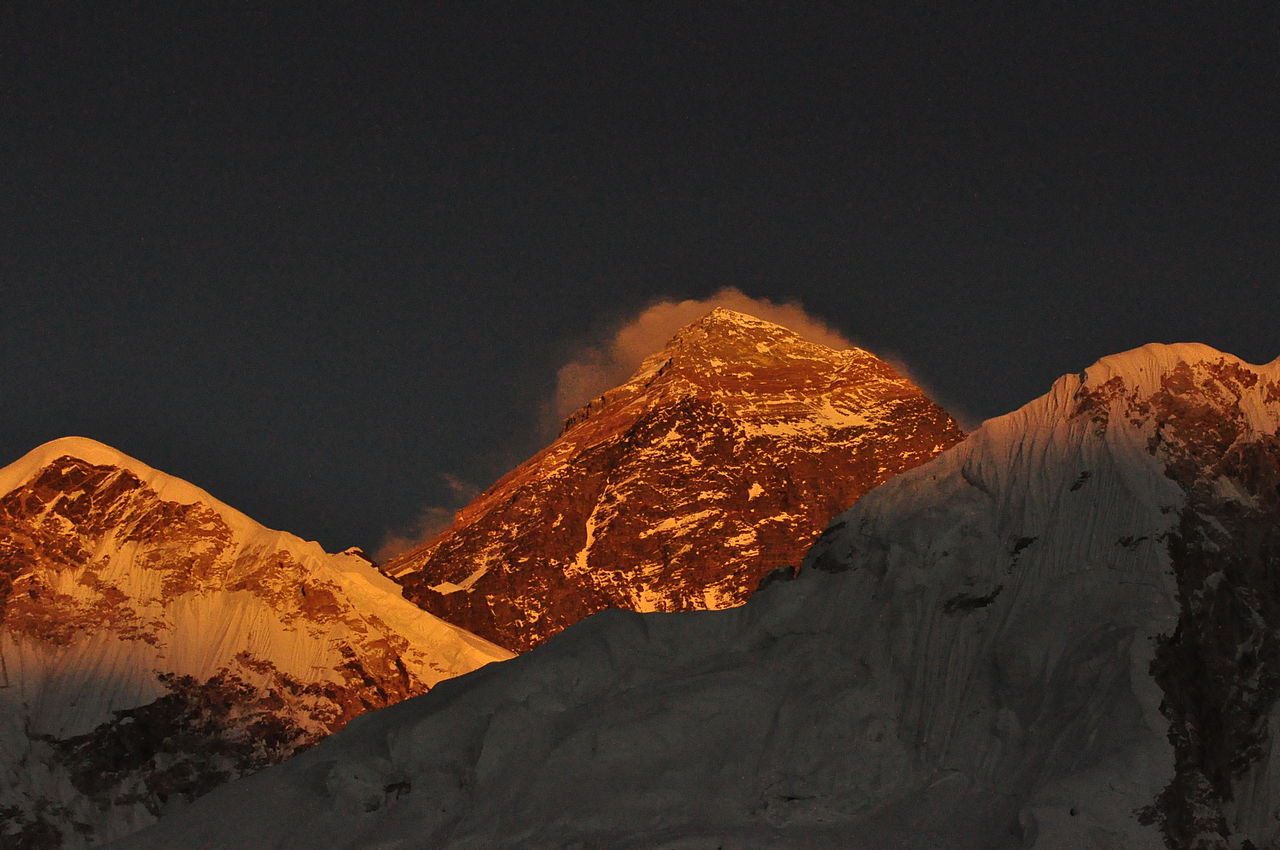
We've known that it was coming for some time, but today Spanish ultrarunner/mountaineer Kilian Jornet has officially announced his attempt to set a new speed record (Fast Known Time (FKT) in his parlance) on the world's highest peak, Mt. Everest. And as usual, he'll be making the attempt in his own unique, unorthodox, and challenging way.

In a press release sent out this morning, Jornet says that he'll be making the climb throughout August and September. But prior to leaving for the Himalaya, he'll first begin to acclimatize in the Alps closer to home. For the next few weeks, Kilian and his support team will live and train in the European mountains as they begin to get their bodies ready for the demands that they'll face once they head to Tibet.

The plan is to attempt to summit Everest from the North Side, along a route that sees little traffic. The exact route hasn't been made clear yet, as the intention is to scout the mountain once they are there. What they find on the slopes of the mountain will ultimately decide which way he will go to the top.

The final summit push will begin at Rongbuk monastery and will continue all the way to the top of Everest, and then back down again. In all, Kilian will have to run about 30 km (18.6 miles), which is a short distance for a man who is use to competing in 100 mile (160 km) long races. But, he has never tested himself at such high altitudes before, so it is unclear how his body will respond. This will be the Spaniard's first attempt at an 8000-meter peak, but despite that he still intends to have a go at the FKT in alpine style and without the use of bottled oxygen.

Additionally, one has to wonder how much of an impact acclimatizing in the Alps will have on his progress. The highest peak in that mountain range is Mont Blanc, which stands 4810 m (15,781 ft) in height. That is not insignificant of course, but it is not even the same height as Base Camp on Everest. In other words, he'll still have a lot of work to do once he arrives in the Himalaya.

Right now, the plan is to depart Europe on August 7 to start the expedition. Kilian and his crew will then spend the next eight weeks prepping and planning for the run. Will he be able to set a new speed record on the highest mountain on the planet? Only time will tell, but I wouldn't doubt the man who set speed records on other mountains like Mont Blanc, Aconcagua, Denali, and Kilimanjaro. Still, Everest is an entirely different beast, and it will be interesting to watch this all unfold.

Stay tuned.

Wednesday, July 27, 2016

Melissa Arnot and Maddie Miller Undertake 50 Peaks Challenge

One of the true adventurous undertakings in the U.S. it to attempt to reach the highest spot in each of the 50 individual states. If one wanted even more of a challenge they would try to do so in just 50 days as well. That's exactly what mountaineers Melissa Arnot and Maddie Miller are attempting to do at the moment, as they are currently in the midst of the 50 Peaks Challenge, as they strive to become the first women to nab each of the high points.

The list of high points across the U.S. is quite diverse. At one end of the spectrum you have Britton Hill in Florida, which is a mere 345 feet (105 meters) above sea level and barely a challenge at all. On the other hand, Denali in Alaska is a stunning 20,308 ft (6189 meters), and a true mountaineering challenge. In between you'll find all kinds of other mountains and hills, most of which are mere walk-ups. Still, nabbing all of them in under 50 days remains a significant achievement in no small part because of the travel time involved.

Melissa and Maddie began their challenge by summiting Denali earlier this spring, and have now been slowly but surely ticking off the other high points as they go. At this point, they've now reached the highest elevation in 43 different states, with Wyoming, Utah, Nevada, California, Oregon, Washington, and Hawaii yet to go. Each of the mountains in those states are above 10,000 feet (3048 meters), which means they will all present a unique challenge. But, considering the resumes that these two ladies bring to the table, they should certainly not have too much of a problem claiming them all.

You can follow their progress on Melissa's website as they close in on the end. Check out the video below for a preview of the challenge as well.

50 Peaks Challenge - Trailer from Eddie Bauer on Vimeo.

Tuesday, July 26, 2016

Karakoram 2016: Summits on Nanga Parbat, It's Over on K2

More news from Pakistan today, where we learn that teams are continuing to make summit pushes on several mountains, while operations have indeed come to an end on K2 following the massive avalanche that hit that mountain over the weekend. As usual, the summer climbing season in the Karakoram remains as topsy-turvy and unpredictable as always.

We'll start with an update from Nanga Parbat, where ExWeb is reporting that Ferran Latorre, Helias Millerioux, and Boyan Petrov set off on a summit push yesterday, successfully topping out at 3:30 PM local time. The entire team returned to Camp 4 later that evening, and are now making their way back down the mountain today. For Latorre, this is his 13th 8000-meter peak, all of which have been summited without the use of supplemental oxygen.

It now appears that this may be the only successful climb on Nanga this year however, as most of the other teams are now preparing to head home. ExWeb says that the route just below the Kinshofer Wall is especially unsafe, discouraging any other climbers from proceeding upwards. It looks like Base Camp will be all but abandoned by this coming weekend.


Yesterday we reported that all commercial teams were also departing from K2 after a large avalanche wiped out Camp 3 over the weekend, destroying all of the tents erected there, while also sweeping away the fixed ropes and a cache of oxygen bottles. At the time, there were some independent climbers who were hoping to regroup and make another attempt on the summit sometime next week. Apparently, those climbers have now changed their mind, and will also be leaving BC over the next few days, making it now two years in a row without a single summit on K2.

Over on Broad Peak, poor weather has turned back the latest summit attempt by Spaniard Oscar Cadiach, but his work on the mountain is far from over. After descending yesterday to escape the conditions, Cadiach has now headed back up the mountain and is reportedly in Camp 3 and waiting for a chance to go higher. If he successfully climbs BP, this will be his 14th and final 8000-meter peak, all climbed without supplemental O's.

Finally, on both Gasherbrum I and II, current summit bids have been turned back due to poor weather. Teams are starting to leave those two mountains as well, although ExWeb says there are other climbers who are in Base Camp and waiting for their attempts on the mountain. While summit bids are certainly not imminent, there will be more attempts coming in the days ahead.

That's it for now. More to come soon.

Monday, July 25, 2016

New Climbing Rules for Everest?

Another story that broke while I was away is the news that Nepal is once again looking to set new rules to govern climbers attempting Everest and other major Himalayan peaks. These rules are often presented under the guise that the Nepali government is looking to improve safety, although often it seems they are mostly meant to give the appearance that officials are actually trying to do something of substance, without really accomplishing much at all. That seems to be the case with these new rules as well, which do very little to alter the climbing scene on the world's highest mountain. 

According to The Himalayan Times, the Nepali government is considering banning solo attempts on its Himalayan peaks, as well as banning mountaineers who are completely blind, have double amputations, or are over the age of 75. Of course, those all sound like reasonable restrictions to make, but when is the last time you've heard of a bling person attempting to summit Everest? After Erik Weihenmayer did it back in 2001, I'm not sure it has even been attempted again. And while double amputees have attempted Everest on several occasions, it isn't a common occurrence either. In other words, those two rules will impact a very small percentage of people. 

As for the age restriction of being under 75, this is a good rule to be sure, even if it also impacts only a handful of potential climbers. The problem is, Nepal has instituted age limits – both minimum and maximum – in the past, only to ignore them when it suits their needs. The 75 years old number has been bandied about several times in the past, and now it is cropping up once again. 

Other proposed changes to the Mountaineering Expedition Regulation include restricting helicopter rides above Base Camp, providing summit certificates to Sherpas, and requiring that all climbers who attempt an 8000-meter peak first have summited a 7000-meter peak as well. Each of these sounds a lot more reasonable and long over due. The use of choppers on the big mountains should definitely be limited, and Sherpas should receive a summit certificate for their efforts as well. The requirement of having experience on a 7000-meter mountain would also go a long way towards improving safety on Everest and other 8-thousanders, and would push some of the crowds off to Nepal's lesser visited peaks first. 

As mentioned, these new regulations are all up for review, and have been submitted to the Department of Tourism in Nepal. How soon they'll decide on the proposal remains to be seen. And if the rules are adopted, how much they are enforced will remain open to conjecture as well. 

Karakoram 2016: Avalanche Ends Season on K2, Summit Pushes Begin Elsewhere

I'm back from the wilds of Mongolia and am catching up on all the news from the world of outdoor adventure that took place while I was away. One of the big stories we had been following before my departure was the unfolding of the climbing season in the Karakoram and Western Himalaya. When I left, the teams were still getting settled into Base Camp, and were beginning their first acclimatization rotations. Now, a few weeks later, the situation is very different, with climbing operations coming to an end on one mountain, while the final summit pushes are underway on others.

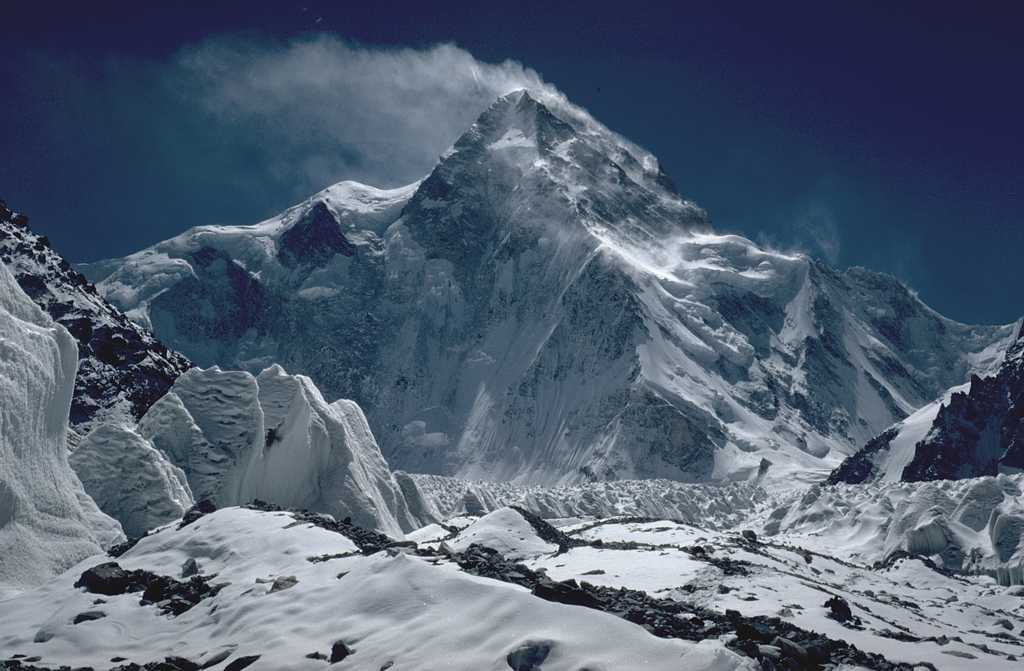
The big news from this past weekend is that a massive avalanche on K2 has brought an end to the season on the world's second tallest mountain. The avalanche hit Camp 3 on Saturday morning, destroying the tents that were built there, while also washing away the fixed ropes and cache of bottled oxygen that was put in place for upcoming summit bids. Fortunately, no one was in C3 at the time, although there were several teams in Camp 2 and other points on the mountain. All have retreated back to BC due to bad weather conditions.

Now, it seems the teams have decided that the mountain is too unsafe to climb this year, and it appears that most are packing their bags to go home. The avalanche wiped out a lot of hard work to fix ropes and establish C3. With time starting to run short, poor weather a common occurrence, and a lack of bottled oxygen, it now seems like the season is over, at least for the major commercial teams. There are a few independent climbers who are hoping to rally the troops and have another go at the mountain however. They are currently eyeing an early-August attempt, weather permitting.


Meanwhile, ExWeb is reporting that the final summit pushes are now underway on Nanga Parbat and Broad Peak. Fern Latorre, Helias Millerioux, Boyan Petrov are all pushing to the top of NP today, while Spaniard Oscar Cadiach and his team are hoping to top out on BP. ExWeb says that if Cadiach is successful, this will be his 14th and final 8000 meter peak for his resume, all of which have been climbed without the use of bottled oxygen.

Finally, over on Gatherbrum II, a Polish team has been struggling with poor weather all season. They had hoped to reach the top early this week, but deteriorating conditions on that mountain were enough to keep them confined to their tents over the weekend. There are no updates on their progress at this time, but hopefully we'll know more soon.

That's it from Pakistan for today. I'll continue to keep an eye on the mountains for further updates. The season is rapidly coming to close once again, but there are still a few stories to come I'm sure.

Friday, July 1, 2016

Karakoram 2016: Climbers in C2 on K2, Sherpa's Record Bid Denied by Pakistani Government

It is early in the summer climbing season in the Karakoram, but already the teams are on the move as they look to take advantage of good weather in the region. While teams are still getting settled elsewhere in Pakistan, on K2 the acclimatization rotations have begun. Climbers have already gone up to Camp 2 on that mountain, even as Sherpa teams work to install ropes to higher altitudes. 

Madison Mountaineering checked in yesterday with the news that their squad has arrived in C1 after a tough climb up 70º slopes. Today, they'll proceed up to C2, where they'll spend a night or two before returning to Base Camp. By all accounts, the entire team is doing well and proceeding according to plan. 

Also still in C2 is the international team that includes Vanessa O'Brien. They reached that point on the mountain yesterday as well, and will remain a couple of nights before descending. This allows their bodies to get use to the thinner oxygen ahead of an eventual summit attempt in about a months time. 

In other news from K2, The Himalayan Times is reporting that a Sherpa's record-setting bid was thwarted by the Pakistani government after he was sent home upon arriving in Islamabad. 25-year old Lakpa Sherpa had hoped to become the youngest person to scale K2 three times, but he was sent back to Kathmandu a day after arriving in Pakistan. 

Lakpa said that he passed through immigration without incident, but a day after his arrival he was contact by a government official and told he had to go home without any further explanation. Despite not being told why he was being shipped back to Nepal, the feeling is that the move was purely a political one. Pakistan has long hoped to generate a mountaineering infrastructure like that found in Nepal to help bolster its economy and employ more local climbers. But as K2 and other mountains continue to become commercialized, guiding companies are increasingly bringing more and more Sherpas into the country to assist and even lead those expeditions. The young climber, who has already summited Everest four times, believes that he won't be allowed back into Pakistan in the future as well, although he isn't sure exactly why.

As The Himalayan Times story points out, Lakpa's story isn't a unique one this summer. Australian climber Chris Jensen Burke had a similar experience when she attempted to enter Pakistan a few weeks back. She was forced to cancel her expedition as well without any clear-cut reason as to why she wouldn't be able to enter the country. It seems others have been sent home too. 

Meanwhile, over on Broad Peak, the Mountain Professionals have checked in and report that they have reached Camp 1 at 5600 meters (18,372 ft) on that mountain. They report snowy routes up steep slopes to reach that point, but everyone was able to climb up without much trouble and spent two nights there to begin their acclimatization process. Now, everyone is back in Base Camp and resting before preparing to head up to C2 in a few days time.

The report also indicates that a second team has now arrived on Broad Peak, but it is a small squad consisting of just four climbers. They won't be particularly helpful in fixing ropes, so it will fall on the Mountain Professionals squad to complete that work. They are currently installing the lines between C1 and C2, with the hope that another commercial team will arrive in the days ahead to help with the work. 

That's it for today. More news from the Karakoram soon. 

Thursday, June 30, 2016

Karakoram Summer 2016: The Arduous Task of Climbing K2 Begins

The summer climbing season is Pakistan is now officially underway. Most of the teams have now arrived in their respective Base Camps, with some already starting their first acclimatization rotations. It'll be a good month or more before they even consider taking a crack at the summit, but the foundation for those ascents is now being put into place.

Most of the focus this summer will fall squarely on K2, where commercial operations have ramped up significantly in the past couple of years. More than 100 climbers have registered for permits on the second tallest mountain in the world in 2016, where the weather usually dictates who actually has a chance of topping out. Traditionally speaking, summit bids won't begin until the last week of July or the first week of August, but for now the climbers are taking advantage of good weather and are preparing for the challenging ascent ahead.

The Madison Mountaineering team climbed up to Advanced Base Camp yesterday, and plan to proceed to Camp 1 at 6096 meters (20,000 ft) today. Once there, they'll spend at least one night before dropping back to BC for a rest. This starts the long process of getting their bodies accustomed to the higher altitudes that will eventually culminate with a summit push. That is still a long way off at this point, but this is the first of many steps in the right direction.

Meanwhile, the International team led by Vanessa O'Brien has already moved up to Camp 2, as her squad continues to make solid progress. O'Brien is looking to become the first American woman to summit K2, and so far everything is going according to plan.


ExWeb reports that the Sherpa teams on K2 have begun installing the ropes above C2 as more teams move up the mountain. There is still a long way to go before they get anywhere close to the summit, but it seems that the team fixing the lines is taking advantage of the good weather while they can. The ExWeb article also rightfully points out that there isn't a lot of room on K2 for tents, so it will be interesting to see how the season unfolds as the climbers work through the logistics.

At the moment, there are six teams in K2 Base Camp, with at least one more yet to arrive. That will make for a crowded mountain, but hopefully one that will remain safe. Climbing K2 is much more difficult than Everest, which compounds the challenges dramatically. This is not a place where traffic jams and long waits are advisable, as this is a mountain that is far less forgiving than it's taller counterpart.

We'll be watching the season unfold with interest. The commercialization of K2 is now in full-swing, and this year will show begin to give us an idea of how wise it is to open the peak up to so many climbers. It should be fascinating to see unfold. Lets just hope everyone stays safe.

Wednesday, June 29, 2016

Did This Indian Couple Fake Their Everest Summit?

By most accounts, the 2016 Everest climbing season was one for the record books. After two years of cancellations, and several years of unusual activity on the mountain, this was about as close to a "normal" year as we've seen in some time. Of course, that doesn't mean that everything went exactly by the book, as we're now discovering. Reports now indicated that one Indian couple may have faked their summit photos, calling into question the validity of their claims.

This story broke on Buzzfeed yesterday, where the captivating story of Dinesh and Tarkeshwari Rathod has been called into question. The couple said that they had reached the summit of Everest back on May 23, realizing a lifelong dream that both had shared. The duo were married back in 2008, and reportedly delayed starting a family until after they topped out on the tallest mountain on the planet. Their story, which includes both serving as police officers back home, garnered headlines across the planet. 

Now, just a few weeks later, cracks have started to appear in their story. The photos that were used to document their summit appear to be doctored, faked, or stolen. One image that was used to show their approach to the summit appears to have been taken directly from the International Mountain Guides website, while others seem to have been obviously photoshopped. As if that wasn't enough, the clothes that the couple are seen wearing on their way up the mountain are different from the outfits that they have on in the summit photos. Anyone who follows Everest closely knows that you don't change your clothing during a summit push.

Even more curious, even though Dinesh and Tarkeshwari claimed to have summited on May 23, they didn't declare their success until June 5. They also reportedly did not arrive in Base Camp until May 4. That isn't nearly enough time to acclimatize and prepare for a summit push, unless they had already done so on another major peak in the area. That doesn't appear to be the case here.

Apparently, there are even indications that the couple have faked summits in the past too, which the Buzzfeed article goes into as well. This all seems to point at yet another Everest fraud, indicating that things have indeed gotten back to normal.