Showing posts with label Aircraft. Show all posts

Thursday, August 25, 2016

Use of Helicopters on Everest Rises Dramatically

If you followed the spring climbing season on Everest with any regularity this year, it was evident that the use of helicopters on the mountain had risen dramatically. But a new report gives us an even closer look at the numbers, that now show not just a surprising number of flights to the mountain, but that many of them were unauthorized. 

According to this story from The Himalayan Times, there were more than 150 helicopter flights conducted to Everest Base Camp and higher during the spring 2016 climbing season. Sources at the Tenzing Hillary Airport in Lukla say that six companies operated at least 151 flights above 5000 meters (16,404 ft) in April and May without properly reporting their activities to Nepal's Civil Aviation Authority. Of those, about 30% (roughly 45 flights) were to locations above Base Camp, most notably Camp 1 and Camp 2 on Everest.

Regulations state that helicopter flights are to go no higher than BC unless they are conducting emergency rescue operations. Those types of flights are monitored closely by Aviation officials, but it seems in this case many pilots were indicating that they were flying to Base Camp, only to go higher up the mountain later on. Authorities say that by going to higher altitudes the pilots are risking their own lives and those of their passengers, warning that there could be a fatal accident if such operations continue.

Representatives of the six companies that conduct the flights insist that they only went to the higher camps to rescue climbers who requested assistance and that they weren't doing anything outside of the regulations. The fact that so many of those flights went unreported however would suggest otherwise. If all of the flights were conducted above board, there would be no need to not report them. 

The cost of a flight to Everest is not cheap. Most companies charge $5000 for a trip to Base Camp, $7500 to go up to Camp 1, and as much as $10,000 to reach Camp 2. Some of the costs of those flights are covered by the insurance companies for climbers who do have to be rescued, but one has to wonder just who is paying for the other flights. 

There have been some suggestions of increasing the use of helicopters on Everest to help shuttle gear up from BC to the higher camps. This could potentially reduce the number of trips that climbers – and more importantly Sherpas – would have to make through the dangerous Khumbu Icefall. This is the section of the climb just above Base Camp that is widely considered the most dangerous section of the mountain. In 2014, the collapse of an ice serac on this section of the climb killed 16 porters who were carrying gear to Camp 1. 

By using helicopters to do that work instead, it would help alleviate those dangers, but there has been no official go-ahead to begin doing that on a large scale. It seems that some of these flights were being made to ease the process of moving gear, even if no one is necessarily admitting it. 

Will the trend of using helicopters on Everest continue to rise in the years ahead? Almost certainly. Will it make things safer? Possibly. Only time will tell. All I know is, that is a lot of unregulated flights to dangerous altitudes, which seems like a recipe for disaster in and of itself. 

Wednesday, July 27, 2016

Video: GoPro Camera Captures Hyperlapse Images of Solar Impulse Flight

Yesterday I posted a story about the Solar Impulse aircraft completing its round-the-world journey using nothing but the rays of the sun to power the flight. Today, I have a great video that was captured by GoPro camera throughout the expedition. The short clip is a hyperlapse of final legs of the excursion, giving us some impressive views of the trip as seen from atop the plane itself. This was a wonderful achievement to say the least, and this video helps to put the accomplishment in perspective.

Monday, June 27, 2016

Risky Antarctic Rescue Mission Completed Successfully

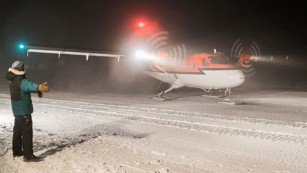
Before I left for Utah last week, one of the stories that we were watching closely was a daring and risky evacuation flight to the South Pole. At the time, all we knew was that a staff member at the Amundsen-Scott research facility had taken ill, and the situation was so desperate that two Twin Otter Aircraft has been scrambled from Kenn Borek Air in Canada to evacuate them. While it took some time to complete, that rescue operation did go off successfully, with everyone involved making it back safely.

Due to the fact that it is currently winter in the Southern Hemisphere, the flight was an incredibly risk one. Weather conditions are unpredictable and very dangerous in that part of the world this time of year, making it risky to come and go from the South Pole. Typically that means that anyone at the South Pole research station has to stay there until spring arrives in November. But in this case, the medical situation was so dire that it was deemed necessary to take the risk to bring out the patient.

That's exactly what happened last week, with the flight carrying not one, but two, South Pole staffers arrived back in Punta Arenas, Chile on Wednesday. That successful return followed several very long day, during which the pilots flew from Canada to South America, than crossed the Southern Ocean to reach the British Rothera Research Station, than continued on to the South Pole, and back again.

Two aircraft were required to complete the rescue with one making the full fight to the Pole, while the other stood by to lend a hand if needed. Fortunately, the entire mission came off without a significant hitch, and the two sick workers are now receiving medical attention. Their names and afflictions haven't been announced.

I'd love to hear more about this story and find out all the details behind it. Hopefully someone will do an in-depth article about what this adventure was like for the pilots. I'm sure there is quite a story to be told.