Sunday, February 26, 2012

GREEK CARNIVAL: Apokries - A Hint of Ancient Dionysian Revels

GREEK CARNIVAL


If you’re sightseeing in the middle of Athens in February and you’re suddenly descended upon by a roving gang of young men wielding plastic bats, don’t be alarmed. They hit people over the head, but the head-bonking is part of the playful merriment that is apokries – carnival

Since ancient times, the Greeks have celebrated carnival with pre-Christian rites. Carnival comes from the Latin “Carne Vale” (farewell, flesh) and is the feast before the fast – triodio, three weeks of revelry preceding Lent. It is the Greek version of Mardi Gras.

You can detect a hint of the ancient Dionysian festivals in the celebrations. Groups of professional mummers used to roam the streets of Athens performing dances and pantomimes. Now, costumed revellers prowl the cobbled streets of the old Plaka district, bopping each other with the plastic hammers. Tangles of coloured streamers and confetti are tossed with abandon. There are private parties and celebrations at some of the hotels. Shop windows display extravagant costumes and masks.

In rural areas, plays and satires are performed, including the Funeral of the Miser, whose soul is taken by devils. In the Peloponnese region, a masked effigy of the King of the Carnival is carried on a bier and then set on fire. In ancient days the mock king was actually put to death. These rites are all symbolic, some dating back to Agamemnon’s time. One ritual is a mock wedding in which the groom is murdered and then resurrected, followed by a symbolic pantomime of plowing and sowing – nature’s renewal and the return of spring. These are similar to the rites of Dionysus, the ancient god of revelry and resurrection.

Even with the pagan holdovers, the religious meaning of this period is strictly observed. The first week, called profoni, is the time in which the fattened pigs are slaughtered and prepared for the feasts of the second “meat-eating week.” During profoni, it is believed the souls of the dead are set free and wander among the living.

On each of the three Saturdays of apokries, prayers are said and the koliva, a dish made of wheat, is prepared and consecrated, then distributed among friends and neighbours in memory of deceased relatives. On the second Thursday of apokries, the pork feast begins and so does the masquerading. In the third week, only dairy foods and eggs may be eaten, in preparation for the long Lenten fast.
My friends and I celebrate Apokries at Patras. (I'm in a butterfly costume!)

Tirokiriaki (Cheese Sunday) is the most vibrant day of the celebrations and includes dancing, masquerades, parades and play-acting. The most spectacular parad is held in the Peloponnese at Patras. Busloads of carnival merry-makers arrive from Athens and the surrounding villages, flooding into the streets of the small port city, swinging their plastic bats, tossing rainbow coils of paper streamers and confetti and squirting one another with coloured plastic foam from aerosol cans.

Carnival is particularly appealing to children and each weekend of apokries the Zappeion and National Gardens in Athens are filled with youngster, masquerading clowns, fairies, musketeers, demons and fantasy creatures. Adult merriment begins at night. Take along your bat.
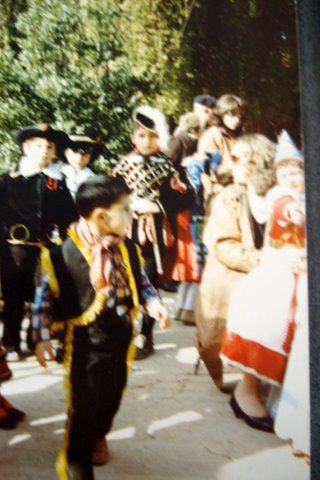
Children in the National Gardens, Athens

Note: This story was first published in the Globe and Mail, February 5, 1986.

Monday, February 20, 2012

VANCOUVER FROM 1900 TO 1990: An Afternoon of Nostalgia at the Vancouver Museum


I visited the Vancouver Museum at Vanier Park on the weekend, mainly to see the neon exhibit, but was pleasantly surprised to find an excellent display of artifacts and settings from  Vancouver 1900 to 1990. What fun to take this trip down memory lane, and to see how the early pioneers lived here as well as the more familiar but almost forgotten eras of the city.

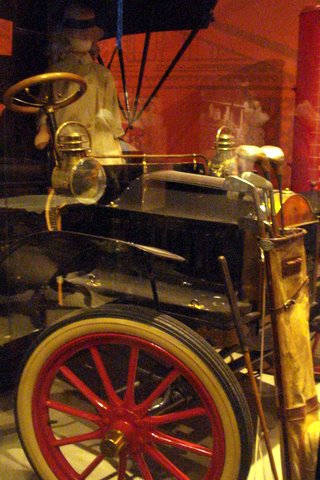
From the 1900's when the city began to be settled, there were displays for each time period that showed the life of the people at that time.  A mother pushing her baby in a pram on the street, and a wealthy woman from Shaughnessy dressed in her expensive gown, to reflections of 50's and even the hippie era.

There were displays of toys, old cars, furniture, a beautiful gold plated cash register from the old Europe Hotel, and displays from the Chinese community and the internment of the Japanese.
 
Look at the golf clubs!

Toys and Childrens garments

Bathing suits were rented out at the beaches!

There were rooms set up with furnishings including working TVs for various periods of times.  Here's a typical 1950's living room.


But my favorite of all was walking into a 1960's-70's hippie house.  There was even a closet of hippie clothes you could try on.  The bookshelf had all the books popular at the time.  There were all sorts of memorabalia around from the time of the Flower Children including a coffee table with all the hash pipes, rolling papers and pamphlets about LSB and marijuana.  Now that was a real trip!


Hippie clothes.

pot smoking paraphanalia


Hippies loved music!

One of the things that I really found interesting was a wooden shack that was an example of shacks built by homeless people under the viaduct.  It was a much more 'sophisticated' structure than the homeless usually have these days.  Apparantly in the '70's there was a whole 'settlement' of them living under the bridges and viaducts.

homeless person's shack


It's well worth a visit to the Museum of Vancouver to see these displays along with the neon signs that used to decorate the city.  It's a real piece of our city's history!


Sunday, February 19, 2012

VISITING THE MUSEUM OF VANCOUVER: When Neon Lit up the City

I grew up in Vancouver at a time when the whole city was lit up with neon signs. There were, at one time, 19,000 of them.  Then, in the 1960's, people started to complain about the garish signs.  "We are being led into a hideous jungle of signs," one reporter wrote. They called it a 'neon nightmare' and said that the signs were out sized, outlandish and outrageous, 'desecrating buildings' and cluttering the streets.  And worse: they were blocking out some of the beautiful scenery of the city.


Personally, I always loved those lights.  It was exciting, on a weekend outing to downtown Granville Street, to walk along under the flashing colors.  Once they removed them, some of the 'spirit' of the downtown was removed as well.  I'm happy to see these days that neon is making a come-back, and Granville Street is starting to look more like the street I remember in the 1950's.


This weekend I visited the Museum of Vancouver where there is an exhibit of some of those famous neons.  There was Hootie the Owl that once perched above the Owl Drugs, and the Smiling Buddha sign from Chinatown.

The museum has a collection of twenty three neon signs on display, only a fraction of the signs that used to flash in the city until a bylaw was passed in 1974 prohibiting them. They were collected from various locations and donated by people who had 'rescued' them.  In spite of the display being labeled
"Neon Vancouver/ Ugly Vancouver"  the lights used to reflect on our rain-wet streets, adding colour on the long rainy days of our winter.  I missed them when they were gone.  It's nice to see them making a comeback.  And it was particularly fun to go and see the old ones, as I remembered them, from those fun days when I was young promenading on Granville Street on a weekend night.


Even churches had neon!


Note:  The display will be on until August 12, 2012.  Info at www.museumofvancouver.ca

Monday, January 30, 2012

DRAGONS DANCE IN THE RAIN


The dragon danced in the rain this weekend at the annual Chinese Lunar New Year parade.  It was appropriate because this was the celebration for the year of the water dragon.  In spite of the icy drizzle, the streets of Chinatown were crowded with spectators who came to enjoy the festivities.  Lions performed their good luck rituals in front of merchant’s shops and exploding firecrackers filled the street with clouds of smoke. 

 Chinatown Gateway

I found a good vantage point near the Chinatown Gateway across from the notorious Shanghai Alley.  The vantage point had some nostalgia for me, because on that corner is the Sam Kee  Building which Ripley titled “the world’s narrowest building’ where, back in the 1950’s my husband and I were invited to celebrate the Chinese New Years with the proprietor and his friends.  At that time it was a jewelry shop with living quarters above, barely wide enough for a sofa in the main room and under Pender street in the proprietor’s rec room tables were set up with mahjong games and expensive bottles of whiskey. I’ve never forgotten that fascinating evening.

Sam Kee Building
. 

Vancouver has one of the largest Chinatowns in North America. Besides the many fascinating shops there are many designated heritage buildings and intriguing stories behind the history of this area. The Millennium Chinatown Gateway entrance across Pender St. was built as a testament to the early Chinese's struggles and triumphs. 

 Lion Dancers

The Lunar New Year parade is a colourful display of the Chinese culture from the lion and dragon dances, traditional performances believed to scare off evil spirits and summon good fortune.  Colourful flags fluttered above the parade of men and beautiful young women dressed in traditional costumes. A variety of bands played, from bag-pipes to a Chinese youth marching band and Vancouver’s familiar Carnival Band decked out in funny costumes. Red envelopes filled with candy were handed out to the bystanders, a tribute to the lei see, traditionally filled with money and given out on holidays as a sign of blessing.


Vancouver has one of North America’s largest Chinese communities. In the late 1890's early Chinese immigrants settled in an area known as Shanghai Alley and Canton Alley. These two alleys were the site of a vibrant nightlife, an opera house, shopping and political and cultural activities. A panel featuring some prominent Chinese people and places depicts the history of the alleys. The West Han Dynasty Bell, unearthed in Guangzhou, China in 1983 is located in Shanghai Alley.  The bell, weighing just under a tonne, was a gift from the City of Guangzhou to Vancouver in honour of the 15th anniversary of the twinning of the two cities.
Dragon Dancers


Balloon Dragon

Parasol Dragon

At the turn of the 20th century, Chinatown prospered as Chinese merchants invested in property extending Chinatown east along Pender St. to Gore St.  Today the “Silk Road Route” is marked clearly with colourful banners and road signs making it easy for a self-guided walking tour. You’ll see some interesting heritage buildings along the route. At the end of Keefer and Columbia streets the Monument of Canadian Chinese has been erected to commemorate historic achievements of Canadian Chinese.

Pretty Ladies

Dragon bearers

Children

Although most of today's Chinese residents live outside of the downtown core, Chinatown's centre is still a busy, interesting hub, situated around the Chinese Cultural Centre on Pender Street marked by a beautiful arch. Be sure and visit the Dr. Sun Yat-Sen Park and Gardens located just behind the cultural centre.


There’s a lot of interesting stores where you can browse, buy souvenirs and even purchase Chinese antiques. To celebrate the New Year the shops were gaily decked in red and gold banners and lanterns. There’s an abundance of  traditional Chinese medicine shops, grocery stores with colourful arrays of veggies, herbs, dried fish, fresh poultry, meat and seafood, tea shops and bakeries.

Ladies riding horses

The rain didn’t dampen my enthusiasm for this annual event. After the parade ended my friend and I went into the shopping mall and warmed up with a bowl of hot soup at the food court.  The parade crowd moved indoors too and filled the mall, where entertainment was provided on a small stage. The Chinese New Years celebrations had started a week ago and ended this weekend with the annual parade.  Even the grey skies didn’t stop people from flocking to Chinatown to enjoy this fun multicultural event.


Gung Hay Fat Choy: Happy New Year!


Monday, January 2, 2012

CHRISTMAS IN THE MOUNTAINS

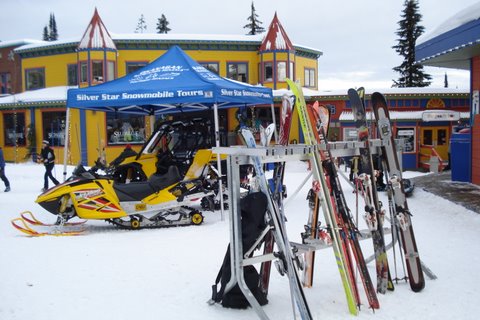
I spent this Christmas in Salmon Arm, a beautiful little town tucked below the mountains, straddling the shores of Lake Shuswap.  My family members are skiers and snowboarders so one day we went on an excursion to the Silver Star Mountain Resort, a special treat for me even though I'm not a skier.

I'd been to Silver Star a couple of times in the past but only during the summer.  This time it was truly a 'winter wonderland'. It's a pretty village with Victorian-style houses painted pastel colours. There's a number of shops and eateries there and it isn't as high-end and expensive as some other resorts, such as Whistler, on the Coast.

I spent the day strolling the village and checking out the shops while the family skied.  There is 3,066 acres of hills with ski runs, and 12 lifts. There's very much a family atmosphere here and the slopes were teeming with family groups.  For the youngsters, there's a Kid's Zone where they can play on their own and have ski lessons while mom and dad tackle the steeper slopes. I saw one tiny fellow, couldn't have been more than two, on a wee pair of skis, being guided along by his grandparents.  And lots of children skiing on their own or being pulled in sleds.


If you've never been skiing there before you can take some tours to acquaint yourself with the mountain.  Free tours leave from the centre of the village every morning and afternoon. There are also Nordic XC Camps held on the mountain and heli-skiing from the village. If you want to spend your holidays there there are plenty of accommodations. (www.skisilverstar.com)


The 'boarder and the skier, Mike & Alex

Monday, December 19, 2011

BURNABY HERITAGE VILLAGE: CELEBRATING CHRISTMAS IN THE 1920'S STYLE


Inside the Jesse Love farmhouse at the Burnaby Heritage Village, the scene is set for a merry Christmas celebration.  Decorations are aglow, a tall fir tree stands in the living room decorated with handmade ornaments, and a tableau of carollers dressed in original clothing gather around the piano ready to sing in a carolling diorama.


All around the village, there is a Christmas spirit.  Inside the Seaforth School, the children have decorated the room in traditional '20's style and a docent in period costume lectures a group of visiting  children on etiquette and school-room manners. ( A young boy sat down on a bench and was scolded because "you don't sit down when the girls or women are standing!" )

The Burnaby Village Museum gives visitors a chance to experience things the way they were back in the 1920's.  The ten acre heritage village is decorated in the 1920s stile, shop windows are full of seasonal goodies and costumed townsfolk welcome visitors into their homes and shops.

At the blacksmiths shop,  the smithy is busy working while a group of school kids watch.  And in the print store, a woman gives a demonstration of how the old printing presses worked.

The Blacksmith Shop

The construction of the heritage village began back in 1971.  The Century Park Museum Association was formed to govern the Heritage Village.  The museum opened in November 1971with a blacksmith shop, buggy and bicycle shop, general store, land office, school house, manor house, ice cream parlour, apothecary shop, barber shop, dentist shop, Chinese general imports shop, print shop and a tram. It first opened for visitors in July 1972, described as a depiction of the 1890- 1920 era of the lower mainland. It was known as the Heritage Village until 1984 when it became the Burnaby Village Museum.  It has expanded to 9 acres allowing the construction of an administration building to house collections and staff offices.

The annual Heritage Christmas event is a great opportunity to experience Christmas traditions as they were in the old days as well as learning their origins.  There are activities for children and families and lots to see and do.  I love browsing the shops, especially the general store, where there are items on display that I remember from my childhood on the Prairies (the galvanized tubs like the one my mom melted snow in on the old stove for our Saturday baths, the old telephone that you operated with a crank!)


In the window of the Bakery you'll see cookie tins with the faces of old British Kings.  And the Way Sang Yuen Wat Kee herb shop displays cases of weird dried herbs and bones and an assortment of strange herbal remedies. 


Inside the old Church, there's a touch of Latin America, with a duo playing "Feliz Navidad".  I visit the old interurban tram next, remembering how I used to ride the tram from school.  It operated from 1912 until the late '50's.  The car has been restored with elegant brass hardware and cherry and oak wood interior.

Probably one of the most fun places at the Village is the old carousel.  This 1912 carousel is fully restored. It used to operate in the PNE grounds years ago. I loved riding it.  Now I can ride it at the Village (and it goes fast too!) accompanied by the music of a restored 1925 Wurlitzer Military band.


You can read more about Christmas at the Burnaby Village Museum on Travel Thru History,
www.travelthruhistory.com

Santa Claus visits the Village daily from 1.20 - 4.30 and 5.30 to 7.30 to December 23 . 
For general opening hours: www.burnabyvillagemuseum.ca